

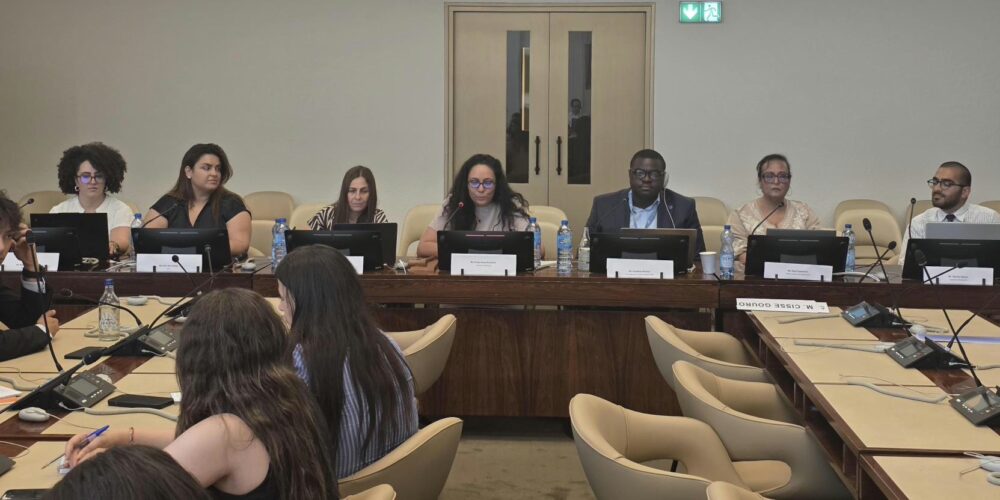
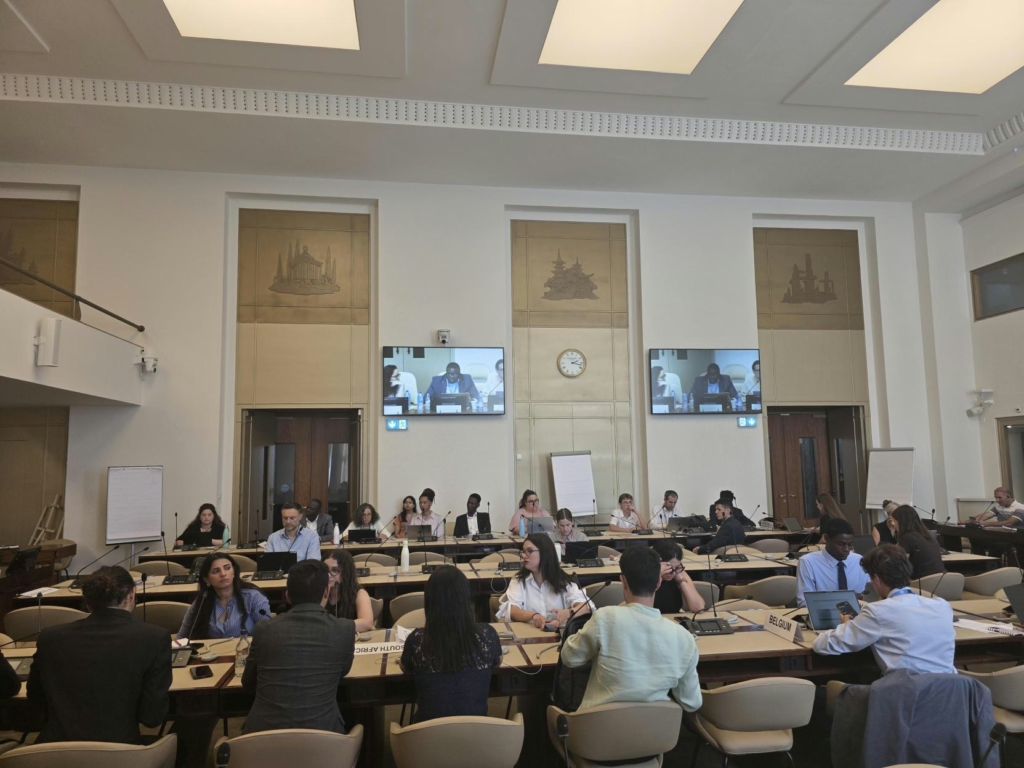
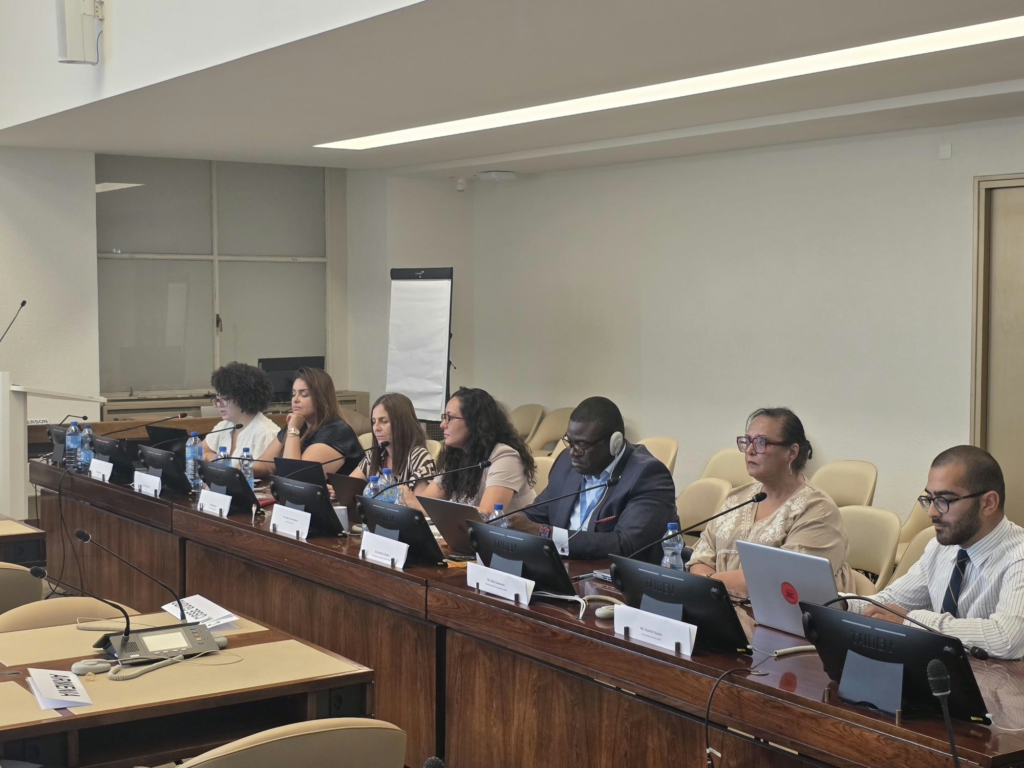
The United Nations, the African Commission on Human and Peoples’ Rights (ACHPR), together with Tunisian and international civil society organizations, reaffirmed the importance of protecting civic space and freedom of association in Tunisia during a side event organized by Committee for Justice (CFJ) on the margins of the 62nd Session of the United Nations Human Rights Council in Geneva.
The event was moderated by Ms. Fatma Asma Moatemri, Maghreb Programme Officer at Committee for Justice, who opened the discussion by emphasizing that recent developments affecting civic space in Tunisia require sustained dialogue between civil society and international and African human rights mechanisms. She stressed the importance of preserving the human rights gains achieved over the past decade and strengthening cooperation within the framework of the Addis Ababa Roadmap.
In his keynote intervention, Mr. Damilola Olawuyi, Chair of the UN Working Group on Business and Human Rights, emphasized that an open and independent civic space is a prerequisite for accountability, transparency, and meaningful stakeholder participation. He underlined that freedom of association is fundamental to the implementation of the UN Guiding Principles on Business and Human Rights and called for ensuring an enabling environment in which civil society organizations can operate free from undue restrictions.
Ms. Najet Zammouri, Vice President of the Tunisian League for Human Rights (LTDH), presented an overview of the challenges currently facing Tunisian civil society organizations. She expressed concern over developments affecting freedom of association and stressed the importance of preserving the legal framework that has enabled civil society to play a central role in monitoring public policies and defending rights and freedoms.
Ms. Hela Ben Salem, representing the Tunisian Association of Democratic Women (ATFD), addressed the impact of current restrictions on women’s rights organizations and women human rights defenders. She highlighted the close link between protecting civic space and ensuring women’s meaningful participation in public life, access to justice, and the defense of their fundamental rights.
Ms. Wahiba Rabah, Civic Space Programme Manager at OMCT Tunisia, outlined the principal legal and institutional challenges facing civil society organizations and stressed the need to uphold international standards on freedom of association while safeguarding the independence of civil society actors.
Mr. Charbel Chaaya, Project Coordinator for Constitutional Law and Transitional Justice at Avocats Sans Frontières (ASF), provided a legal analysis of recent developments affecting freedom of association in Tunisia. He emphasized that any future legislative reforms should remain fully consistent with Tunisia’s Constitution as well as its international and African human rights obligations.
In her concluding remarks, Commissioner Salma Sassi, Member of the African Commission on Human and Peoples’ Rights and Country Rapporteur for Tunisia, reaffirmed the Commission’s close attention to developments affecting civic space in Tunisia. She stressed that freedom of association is a fundamental right protected under African and international human rights law and highlighted the importance of maintaining dialogue between public authorities and civil society while ensuring that any legal reforms remain consistent with Tunisia’s regional and international commitments.
The event concluded with an interactive discussion involving representatives of diplomatic missions, international organizations, African and UN human rights mechanisms, and civil society organizations. Participants emphasized the importance of continued international and regional support for Tunisian civil society and called for stronger cooperation between African and UN human rights mechanisms within the framework of the Addis Ababa Roadmap.
Participants concluded that protecting civic space and preserving the independence of civil society organizations are essential prerequisites for strengthening the rule of law, democratic participation, and the protection of human rights in Tunisia. The event delivered a clear message of solidarity and support to Tunisian civil society organizations and human rights defenders facing current challenges.
Committee for Justice (CFJ) extends its sincere appreciation to all partners who contributed to the successful organization of this side event, particularly the Tunisian League for Human Rights (LTDH), the Tunisian Association of Democratic Women (ATFD), and Avocats Sans Frontières (ASF). CFJ also expresses its special gratitude to OMCT Tunisia and Heinrich Böll Stiftung Tunisia (HBS Tunisia), whose valuable support contributed significantly to the success of the event and to advancing dialogue on the protection of civic space and freedom of association in Tunisia.