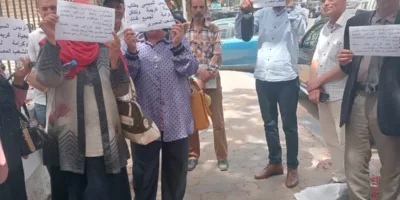


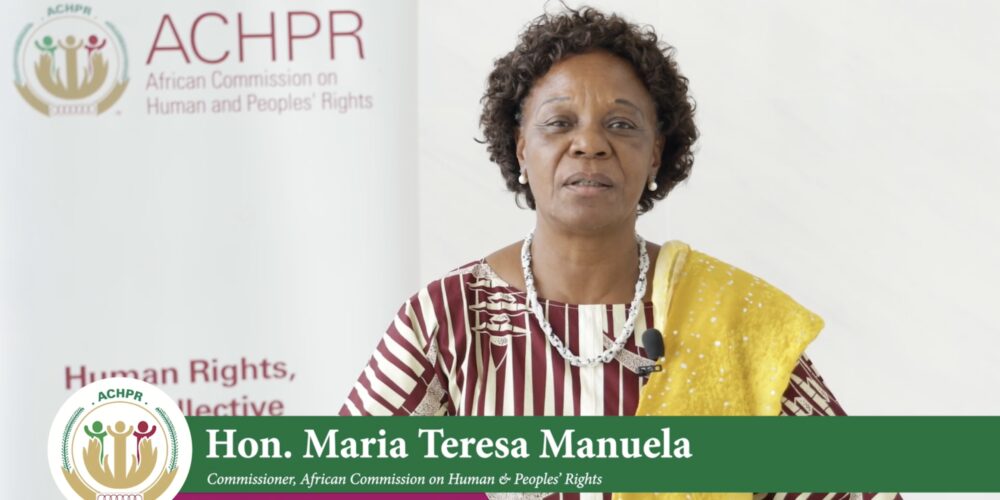
Banjul, The Gambia — The Committee for Justice (CFJ) organized a meeting between Hon. Commissioner Maria Teresa Manuela, Special Rapporteur on Prisons, Conditions of Detention and Policing in Africa at the African Commission on Human and Peoples’ Rights (ACHPR), and Sudanese civil society organizations, on the margins of the 87th Ordinary Session of the ACHPR in Banjul.
The meeting provided an important opportunity for Sudanese organizations to brief the Special Rapporteur directly on the rapidly deteriorating situation of detention, policing, and deprivation of liberty in Sudan, particularly in areas affected by the ongoing armed conflict and under the control of the Rapid Support Forces (RSF).
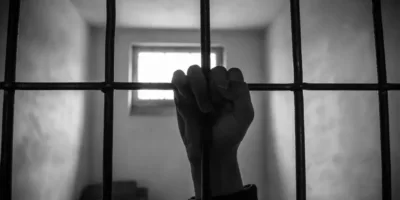
During the meeting, Sudanese civil society representatives raised grave concerns regarding arbitrary arrests, enforced disappearances, torture, ill-treatment, and the continued use of formal and informal detention sites. Particular attention was given to the situation in Dagrees/Daqris Prison in Nyala, South Darfur, where participants highlighted reports of severe overcrowding, lack of adequate food, poor hygiene, limited access to clean water, and the absence of basic safeguards for detainees.
The discussions also addressed the reported use by the RSF of unofficial places of detention, including schools, hospitals, abandoned buildings, and other civilian facilities, where detainees may be held outside any legal framework and without access to families, lawyers, or independent monitoring. Participants further raised concerns regarding ransom demands, financial exploitation of families, and the use of detention as a tool of intimidation and control.
The meeting also examined the link between forced displacement and policing practices, including arrests, harassment, and insecurity affecting displaced persons and refugees, both inside Sudan and in neighboring countries. Participants stressed that Sudanese refugees and asylum seekers fleeing the conflict must be protected from arbitrary arrest, refoulement, and other measures that may expose them to further violations.
Sudanese organizations also highlighted the specific situation of women in detention, including risks of abuse, lack of gender-sensitive detention conditions, and the absence of adequate protection mechanisms. They further underlined the situation of human rights defenders, lawyers, journalists, and community actors who continue to face arrest, threats, reprisals, and intimidation due to their work documenting violations and assisting victims.
CFJ stressed that the worsening conditions of detention in Sudan must be treated as a central protection and accountability concern. The organization emphasized that arbitrary detention, enforced disappearance, torture, and detention in unofficial facilities may amount to serious violations of the African Charter on Human and Peoples’ Rights and other applicable international human rights and humanitarian law standards.
CFJ calls on the ACHPR, including the mandate of the Special Rapporteur on Prisons, Conditions of Detention and Policing in Africa, to continue monitoring detention-related violations in Sudan, engage with relevant regional and international mechanisms, and urge all parties to the conflict to immediately disclose the fate and whereabouts of all detainees, release those arbitrarily detained, end torture and ill-treatment, and allow independent monitoring of all places of detention.
CFJ also urges neighboring States hosting Sudanese refugees and asylum seekers to uphold their obligations under international and regional law, including the principles of non-refoulement, protection from arbitrary detention, and access to due process and basic services.
“This meeting was an important opportunity for Sudanese civil society organizations to bring urgent detention-related concerns directly to the attention of the ACHPR mandate. The situation in Sudan requires sustained regional attention, particularly where detention is being used outside the rule of law, in conditions that expose civilians, women, refugees, and human rights defenders to further harm,” said CFJ.
CFJ reaffirms its commitment to supporting Sudanese civil society organizations in their engagement with African and international human rights mechanisms, and to strengthening documentation, protection, and accountability efforts concerning violations committed in the context of the ongoing conflict in Sudan.