

Geneva – 7 October 2026
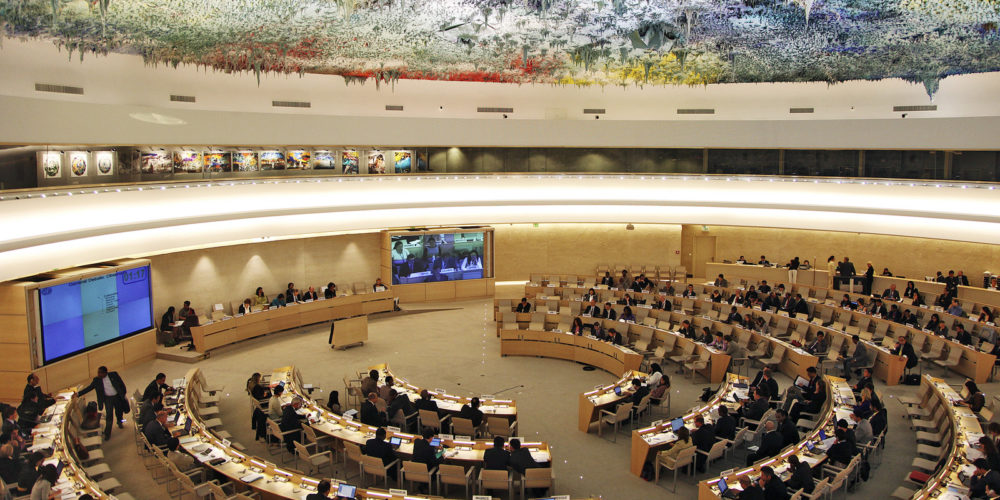
The Committee for Justice (CFJ) welcomes the adoption by the United Nations Human Rights Council of the new resolution responding to the human rights and humanitarian crisis caused by the ongoing armed conflict in Sudan, including the renewal of the mandate of the Independent International Fact-Finding Mission for the Sudan for an additional year. The decision reaffirms the continuing need for independent investigation into serious violations, preservation of evidence, accountability, and justice and effective remedies for victims and survivors.
CFJ, together with its Sudanese civil society partners, participated in the consultations preceding the adoption of the resolution and submitted a number of proposals focused on safeguarding the independence and continuity of the Fact-Finding Mission, strengthening the role and protection of human rights defenders and civil society, and enhancing cooperation and complementarity between international and African accountability mechanisms. In this regard, CFJ particularly welcomes the resolution’s strengthened emphasis on cooperation, complementarity and coordination between accountability mechanisms, its reference to the extension of the mandate of the Joint Fact-Finding Mission of the African Commission on Human and Peoples’ Rights, and its recognition of the Banjul Joint Declaration on Sudan, adopted in May 2026 by the African Joint Fact-Finding Mission and the UN Independent International Fact-Finding Mission.
CFJ also welcomes the resolution’s recognition of the courage and resilience of victims, survivors, Sudanese civil society, humanitarian actors, journalists and human rights defenders, particularly women and youth, and their commitment to documenting violations despite the significant personal risks they face. The organization further welcomes the resolution’s condemnation of killings, attacks, arbitrary detention and reprisals targeting human rights defenders, journalists, lawyers and civil society actors, as well as its explicit recognition of the efforts of human rights defenders to document and preserve evidence of violations of international humanitarian law and violations and abuses of human rights.
Ahmed Mefreh, Executive Director of the Committee for Justice, said: “The renewal of the Fact-Finding Mission’s mandate sends an important message that accountability for serious violations in Sudan cannot be put on hold while the conflict continues and victims and survivors remain in need of truth and justice. We particularly welcome the resolution’s stronger recognition of cooperation between UN and African mechanisms and of the essential role played by civil society and human rights defenders in documenting violations and preserving evidence. At the same time, complementarity with any national mechanism must be based on independence, impartiality and effectiveness demonstrated in practice, and must never be allowed to undermine, limit or substitute the independent mandate of the UN Fact-Finding Mission.”
CFJ further welcomes the resolution’s emphasis on prompt, full, independent, impartial, transparent and credible investigations into violations committed by all parties to the conflict, as well as its recognition of the importance of preserving evidence and systematically documenting casualties for future accountability, remedies and reparations. CFJ attaches particular importance to the resolution’s recognition of the role that the International Criminal Court can play in accountability efforts and its reference to the Fact-Finding Mission’s call to extend the Court’s jurisdiction beyond Darfur to the whole of Sudan. Addressing existing accountability gaps is essential to ensuring that those responsible for serious international crimes are not shielded from accountability because of where those crimes were committed within Sudan.
While welcoming the renewal of the Fact-Finding Mission for an additional year, CFJ notes that during the consultations it advocated for a two-year extension in order to provide the Mission with greater continuity, predictability and capacity to plan its investigations and evidence-preservation work. CFJ also welcomes the provision for the participation of a civil society representative in the enhanced interactive dialogue following the Mission’s forthcoming oral update to the Human Rights Council, which will help ensure that Sudanese civil society voices remain directly represented in the Council’s consideration of the situation.
CFJ stresses that acknowledging the establishment of a national investigation mechanism should not in itself be understood as recognition of its independence, impartiality or effectiveness. These standards must be demonstrated in practice, including through meaningful cooperation with international and regional mechanisms and safe and genuine engagement with victims, survivors, independent civil society organizations and human rights defenders documenting violations inside Sudan.
CFJ calls on all parties to the conflict, States and other relevant actors to cooperate fully with the Independent International Fact-Finding Mission and other independent accountability mechanisms and to ensure that victims, witnesses, human rights defenders and civil society organizations can cooperate with them safely and without fear of reprisals. CFJ will continue working with its Sudanese partners and African and UN human rights mechanisms to protect human rights defenders, support documentation and evidence preservation, and advance accountability processes that place the rights of victims and survivors at the centre of the response to the crisis in Sudan.