

The Committee for Justice (CFJ) has submitted a written statement to the 62nd session of the United Nations Human Rights Council, contributing to the Enhanced Interactive Dialogue on the oral update of the UN Independent International Fact-Finding Mission for the Sudan.
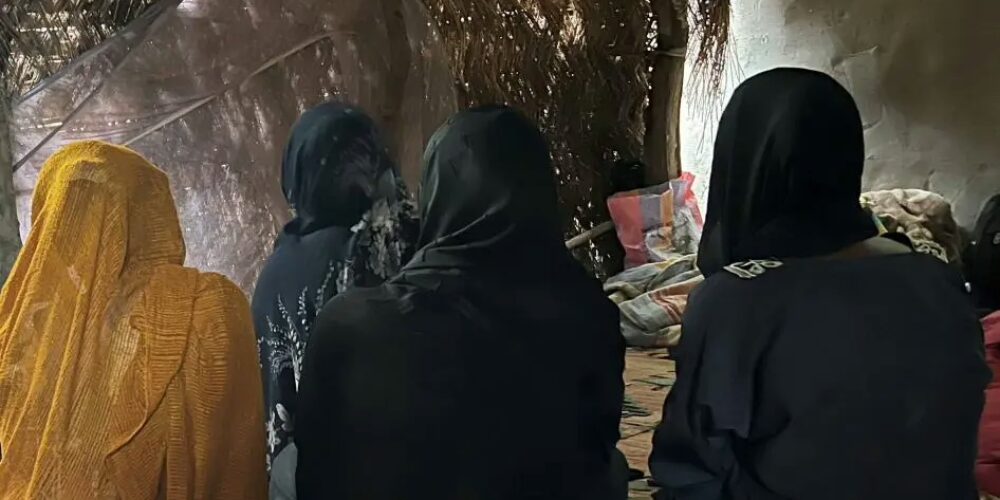
The statement warns that the armed conflict in Sudan continues to generate grave violations of international human rights law and international humanitarian law, including attacks affecting civilians and civilian objects, arbitrary detention, enforced disappearance, torture and ill-treatment, forced displacement, and reprisals against those documenting violations or supporting victims.
Between March 2026 and 24 May 2026, CFJ monitored 13,828 violations and incidents affecting civilians in Sudan. These included 13,191 civilians subjected to forced displacement, 149 incidents in which civilians were killed by bombing or shelling, 19 extrajudicial killings, 47 cases of deprivation of liberty, 45 cases of arbitrary detention, 24 cases of enforced disappearance, two cases of torture, two cases of repeated detention, and two cases involving denial of medical care.
CFJ stressed that these figures remain conservative in light of insecurity, communications disruptions, restricted access to victims and witnesses, and the risks faced by local monitors and human rights defenders.
The statement highlights a continuing pattern of attacks on civilian objects and protected facilities. CFJ documented the 20 March 2026 strike on El-Daein Teaching Hospital in East Darfur, which killed at least 64 civilians and injured approximately 113 others, while rendering the hospital out of service. CFJ also documented a drone strike on Al-Jabalain Hospital on 2 April 2026 that killed three medical professionals and other civilians, as well as an attack on a wedding celebration in Kutum, Darfur, that killed 56 civilians, including 17 children, and injured 107 others.
“The scale and recurrence of violations in Sudan make clear that independent international investigations remain indispensable,” said Usame Mehmetoglu, Regional Officer at CFJ. “Civilian protection, evidence preservation, and accountability must remain at the centre of the Human Rights Council’s response, particularly as domestic protection systems remain unable to provide effective remedies for victims.”
CFJ also raised alarm over the expanding use of detention, enforced disappearance, and inhuman detention conditions as tools of control in conflict-affected areas. In El Fasher, CFJ documented the detention of approximately 2,377 persons, including 1,470 civilians, 426 children, 370 women, and at least 20 doctors, across multiple detention sites, including Shala Prison, service facilities, and shipping containers.
The statement further draws attention to conditions inside Dagaris Prison in Nyala, where CFJ documented severe overcrowding, food shortages, inadequate medical care, deaths linked to neglect, and alleged payment demands in exchange for release. According to information reviewed by CFJ, the prison was holding approximately 19,500 detainees despite an official capacity of 4,500.
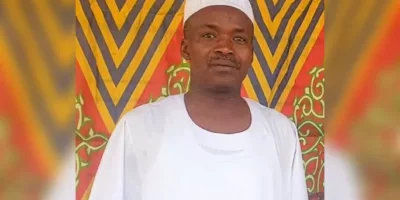
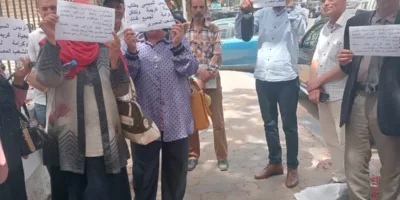
CFJ also warned that lawyers, journalists, human rights defenders, humanitarian volunteers, political activists, and others perceived as documenting abuses or supporting victims continue to face arrest warrants, arbitrary arrests, enforced disappearance, intimidation, and reprisals. The statement refers to cases affecting journalists and lawyers, including the repeated arbitrary arrest, enforced disappearance, torture, and forced displacement of lawyer and human rights defender Abdulhafiz Ahmed Daoud Guma.
CFJ welcomed the Banjul Joint Declaration on Sudan, adopted by the Joint Fact-Finding Mission of the African Commission on Human and Peoples’ Rights on Sudan and the UN Independent International Fact-Finding Mission for the Sudan during the 87th Ordinary Session of the African Commission on Human and Peoples’ Rights. CFJ considered the Declaration an important step toward strengthening cooperation between African and UN human rights mechanisms, particularly on civilian protection, evidence preservation, prevention of atrocity crimes, and support for Sudanese civil society.
At the same time, CFJ emphasized that cooperation between mechanisms must translate into concrete protection and accountability outcomes, including stronger documentation, coordinated follow-up, and increased support for human rights organizations working on Sudan.
CFJ urged the Human Rights Council to:
- Renew and strengthen the mandate of the UN Fact-Finding Mission on Sudan for as long as the armed conflict continues and until credible, independent, and effective national accountability mechanisms are in place.
- Call on all parties to immediately cease attacks on civilians, medical facilities, detention sites, displacement camps, markets, schools, and other civilian objects.
- Urge independent investigations into attacks on hospitals, social gatherings, displacement sites, and detention facilities, including incidents documented in El-Daein, Al-Jabalain, Kutum, El Fasher, Shala Prison, and Dagaris Prison.
- Call for unhindered humanitarian access, including access to detention facilities, conflict-affected areas, and communities subjected to forced displacement.
- Encourage continued cooperation between United Nations and African human rights mechanisms, ensuring that such cooperation leads to tangible protection and accountability outcomes.