

Banjul, The Gambia — 15 May 2026
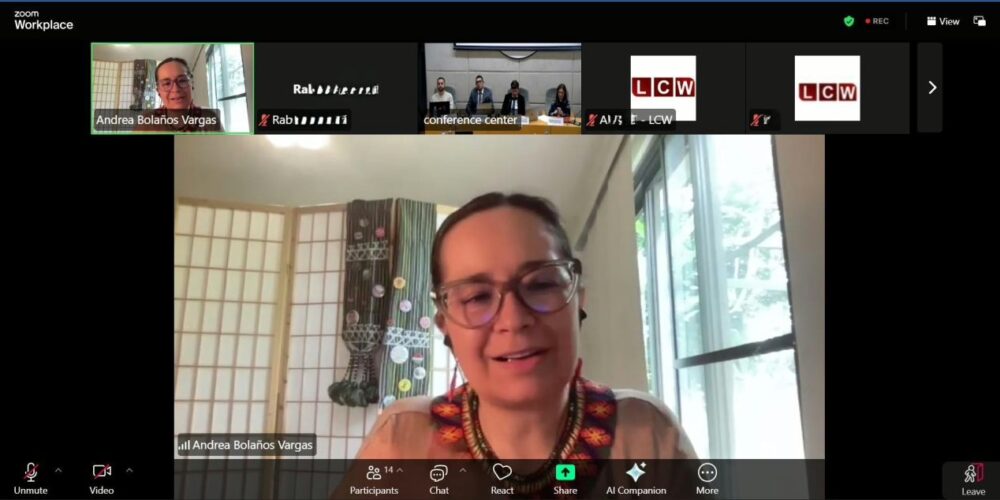
The Committee for Justice (CFJ), in cooperation with the International Commission of Jurists, Libya Crimes Watch, and Intersection Association for Rights and Freedoms, co-organized a side event on 15 May 2026 on the margins of the 87th Ordinary Session of the African Commission on Human and Peoples’ Rights (ACHPR), titled “The Situation of Human Rights Defenders in North Africa in 2026.”
The side event brought together civil society representatives, human rights experts, and regional and international stakeholders to discuss the situation of human rights defenders in Egypt, Libya, and Tunisia. The discussion addressed the shrinking civic space across North Africa, the use of security and counter-terrorism frameworks against peaceful human rights work, judicial harassment, arbitrary detention, reprisals, and the protection needs of defenders working inside their countries and in exile.
The panel was chaired by Stephen Collins, Legal Adviser at the International Commission of Jurists MENA Programme, and featured interventions by Hon. Comm. Selma Sassi ACHPR Commissioner, Country Rapporteur for Tunisia and Libya, and Special Rapporteur on Refugees, Asylum Seekers, Displaced Persons and Migrants in Africa; Ms. Andrea Bolaños Vargas, UN Special Rapporteur on the situation of human rights defenders; Usame Mehmetoglu, Regional Officer at the Committee for Justice; Montassar Salem, Director of Advocacy and Rule of Law at Intersection Association for Rights and Freedoms; and Nour Khalifa, Communications and Outreach Officer at Libya Crimes Watch.
Usame Mehmetoglu, Regional Officer at CFJ participated in the panel and delivered an intervention on the situation of Egyptian human rights defenders inside the country and in the diaspora, particularly in light of Egypt’s recent review before the African Commission.
In his intervention, Mehmetoglu stressed that the situation of human rights defenders in Egypt cannot be separated from the wider restrictions imposed on civic space. He noted that peaceful human rights work, including documentation, legal assistance, public advocacy, and support to victims, continues to be treated in many cases as a national security threat.
He further emphasized that the release of defenders from detention does not always constitute genuine freedom. Many defenders, lawyers, journalists, researchers, and activists continue to face travel bans, asset freezes, police surveillance, probationary measures, or restrictions linked to terrorism lists after their release. These measures, he noted, create a form of continued punishment that prevents defenders from resuming their work and exercising their rights in practice.
The intervention also focused on the situation of human rights lawyers in Egypt, who play a central role in defending detainees, documenting enforced disappearance, torture and ill-treatment, and assisting victims and families. Mehmetoglu warned that when lawyers are subjected to arrest, intimidation, prosecution, or other forms of reprisal because of their work, the impact goes beyond individual cases and undermines the right to defence, access to justice, and the ability of victims to seek effective remedies.
Addressing the situation of Egyptian defenders in the diaspora, Mehmetoglu emphasized that exile does not always provide safety. He pointed to patterns of cyberattacks, online smear campaigns, surveillance, threats, trials in absentia, and pressure exerted through family members inside Egypt. He stressed that transnational repression must be treated as a core protection concern, particularly when defenders cooperate with African and UN human rights mechanisms.
“Egypt’s review before the African Commission should be seen as an opening, not an endpoint,” Mehmetoglu said. “Real progress will be measured when a defender is not targeted for his human rights work; when defenders stop being trapped by travel bans, asset freezes, or surveillance; when a lawyer can defend a client without fearing prosecution; and when a researcher or activist abroad can speak freely without their family being placed under pressure.”
The side event also provided space for discussion on the situation of human rights defenders in Libya and Tunisia, as well as the role of the African Commission and international mechanisms in strengthening protection, accountability, and safe civil society engagement across the region.
CFJ reaffirmed that human rights defenders should not be treated as adversaries to States, but as essential partners in implementing the African Charter on Human and Peoples’ Rights. Their work remains central to accountability, access to justice, prevention of violations, and the protection of victims.
CFJ calls on the African Commission and relevant regional and international mechanisms to ensure that the protection of human rights defenders remains at the center of their engagement with North African States. This includes addressing reprisals, lifting arbitrary restrictions, protecting lawyers and civil society actors, ensuring safe cooperation with human rights mechanisms, and taking concrete steps to restore civic space across the region.