

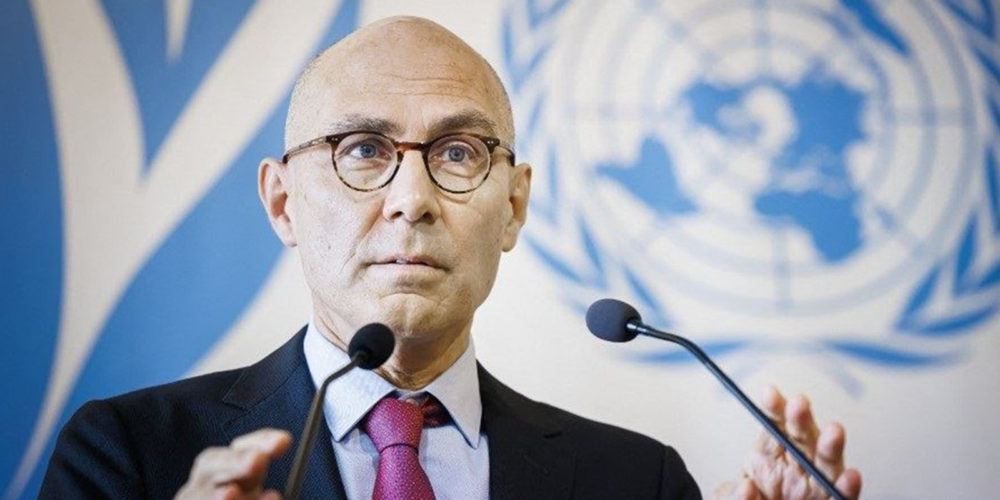
United Nations High Commissioner for Human Rights Volker Türk has expressed grave alarm over the sharp escalation in drone attacks across Sudan, warning of their devastating impact on civilians and essential infrastructure. According to the UN Human Rights Office (OHCHR), at least 306 people were killed and hundreds injured in drone strikes during the first three weeks of October 2026.
In a statement issued on 23 October, Türk strongly condemned attacks attributed to both the Sudanese Armed Forces (SAF) and the Rapid Support Forces (RSF), which have affected civilian areas across Kordofan, Darfur, Blue Nile, Khartoum, and other states.
OHCHR documented strikes affecting residential areas, markets, healthcare facilities, displacement sites, and critical infrastructure, including electricity stations and water sources. The High Commissioner warned that the growing reliance on drones, which have accounted for the majority of conflict-related civilian deaths documented in Sudan this year, is further exacerbating the country’s already catastrophic humanitarian crisis.
Particular concern was raised over repeated attacks on sites sheltering internally displaced persons (IDPs). Between 6 and 10 October, drone strikes allegedly carried out by the SAF against displacement shelters in Ghubeish and El Nuhud, West Kordofan, killed at least 25 civilians and injured 31 others, including women and children.
On 9 October, an alleged RSF drone attack struck displaced civilians engaged in artisanal gold mining near a displacement site in Abu Shendi, Blue Nile State, killing at least 31 people, most of whom were women and children.
OHCHR also documented two alleged RSF drone strikes on the Bajaun gold mining area in South Kordofan on 9 and 16 October, resulting in 42 civilian deaths and 25 injuries. The Office raised serious concerns about attacks against economically valuable locations, emphasizing that financial contributions to a party’s war effort do not, in themselves, transform civilian objects into legitimate military targets under international humanitarian law.
Among the deadliest incidents reported was an attack on a transportation truck in Dibab, West Kordofan, on 18 October. At least 139 people were killed and dozens injured in a repeated strike, commonly known as a double-tap attack, in an area controlled by the RSF.
Markets and healthcare facilities have also suffered significant damage. Drone strikes on markets in North and South Darfur and West Kordofan reportedly killed 23 civilians, while an attack attributed to the RSF on Um Darfa Hospital in Blue Nile State on 11 October seriously injured two healthcare workers and forced the facility out of operation.
The High Commissioner further expressed concern over emerging patterns of retaliatory drone strikes, including attacks attributed to the RSF in Khartoum reportedly launched in response to alleged SAF aerial operations in Nyala, South Darfur.
Türk reiterated that all parties to the conflict remain bound by international humanitarian law, particularly the obligations to distinguish between civilians and combatants, protect civilian objects, and refrain from indiscriminate attacks. He stressed the urgent need to halt attacks endangering civilians and safeguard infrastructure essential to their survival.
Addressing the wider drivers of the conflict, Türk called on the international community to confront the continued flow of weapons into Sudan and prevent arms transfers that contribute to violations of international humanitarian law.
He also urged the SAF, RSF, and their affiliated forces to commit to a ceasefire, emphasizing that sustainable peace can only be achieved through a negotiated political settlement grounded in respect for human rights and accountability for widespread violations and abuses.
The statement underscores the worsening risks facing Sudanese civilians as the conflict continues, highlighting the urgent need for effective civilian protection, independent investigations into alleged violations, and accountability for those responsible.