

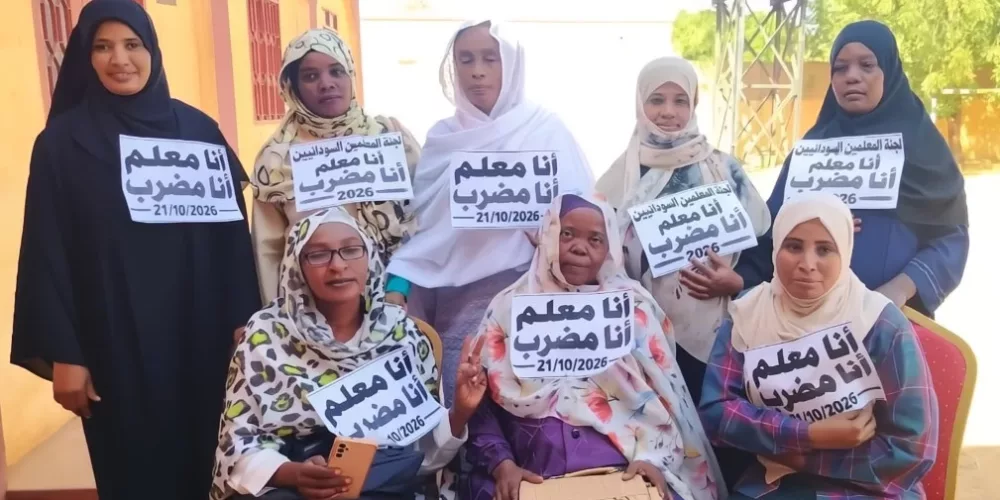
The Committee for Justice (CFJ) has documented the strike carried out by teachers in Khartoum State on October 21 and 22, 2026, in response to a call by the Sudanese Teachers Committee, demanding improvements to their living and professional conditions. Chief among their demands is raising the minimum wage to 500,000 Sudanese pounds, amid worsening economic conditions and rising living costs that continue to place significant pressure on education sector workers and limit their ability to meet their basic needs.
According to CFJ, the strike comes amid growing demands by teachers for their financial rights and improved working conditions, at a time when the education sector in Sudan faces increasing challenges resulting from the ongoing conflict and economic crisis.
Teachers have emphasized that improving salaries and ensuring the payment of financial entitlements are essential to guaranteeing a minimum standard of living and enabling them to continue performing their educational duties under conditions that preserve their professional dignity.
The possibility of punitive measures against teachers participating in the strike raises concerns regarding respect for their trade union rights, including the right to organize and to peacefully express professional demands.
CFJ stresses the importance of addressing labor and trade union actions through dialogue and constructive engagement with legitimate demands, rather than through threats, arbitrary transfers, dismissal, or the withholding of financial entitlements.
CFJ calls on the Sudanese authorities and all stakeholders in the education sector to engage in serious dialogue with teachers’ representatives, consider the demand to raise the minimum wage to 500,000 Sudanese pounds, and take steps to settle outstanding financial entitlements while improving working and living conditions.
The organization also urges respect for the right to peaceful strike action and calls for refraining from any retaliatory measures against participants, thereby helping to protect trade union rights and support the stability of the educational process.