

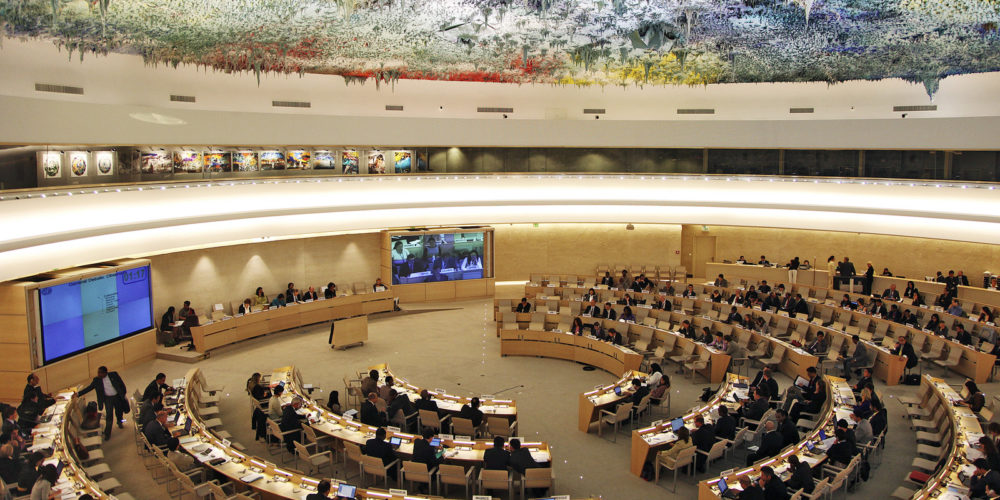
The Committee for Justice (CFJ) has contributed to the ongoing consultations on the new UN Human Rights Council resolution on Sudan, submitting recommendations aimed at strengthening independent accountability mechanisms, protecting the mandate of the Independent International Fact-Finding Mission for the Sudan (FFM), and ensuring a meaningful role for Sudanese civil society and human rights defenders.
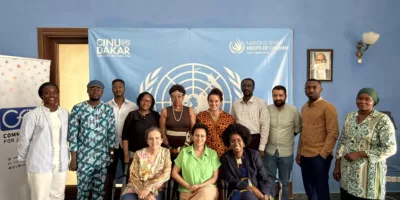
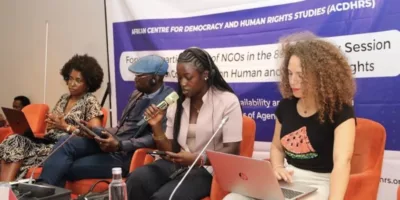
CFJ participated in the consultation process alongside Sudanese civil society partners and provided the core group leading the negotiations with proposed amendments to both the preambular and operative paragraphs of the draft resolution.
CFJ welcomed important improvements introduced in the revised text, particularly the stronger recognition of cooperation, complementarity and coordination between international and African human rights and accountability mechanisms.
In particular, CFJ welcomed the references to the Joint Fact-Finding Mission established by the African Commission on Human and Peoples’ Rights (ACHPR) and to the Banjul Joint Declaration adopted by the African and UN Fact-Finding Missions.
CFJ considers this development particularly important for strengthening cooperation between the African and UN human rights systems, reducing duplication, preserving evidence and reinforcing accountability efforts concerning violations committed in Sudan.
The organization also welcomed the draft’s recognition of the role of Sudanese victims and survivors, civil society organizations, journalists and human rights defenders who continue to document violations and support affected communities despite serious personal risks.
Concerns over references to the National Investigation Commission
At the same time, CFJ raised concerns regarding the language concerning national accountability mechanisms, particularly the reference in PP19 to the establishment of the National Investigation Commission.
CFJ stressed that acknowledging the establishment of a national investigation body should not be interpreted as recognition that the mechanism is independent, impartial or effective.
To date, CFJ believes that sufficient evidence has not been demonstrated to establish that the National Investigation Commission operates with the level of independence and impartiality required of a credible accountability mechanism.
CFJ noted that this concern goes beyond the Commission’s relationship with the UN Fact-Finding Mission. Independent Sudanese human rights organizations and human rights defenders have continued to document violations, preserve evidence and provide assistance to victims and survivors from inside Sudan under extremely difficult conditions. Meaningful, safe and systematic engagement with such actors is an important indicator of the credibility and effectiveness of any national accountability mechanism.
CFJ therefore called for the resolution to maintain a clear distinction between acknowledging the formal establishment of the National Investigation Commission and assessing its independence, impartiality and effectiveness in practice.
Protecting the independence and continuity of the UN Fact-Finding Mission
Regarding the operative paragraphs, CFJ reiterated its recommendation that the mandate of the Independent International Fact-Finding Mission for the Sudan be extended for two years rather than one year.
Given the continuing violations, the scale of evidence that must be collected and preserved, and the complexity of investigations and accountability processes, CFJ considers that a two-year mandate would provide the Mission with greater continuity and predictability and allow it to plan its investigative work more effectively.
CFJ also proposed an explicit safeguard regarding complementarity with national accountability mechanisms. The organization recommended that the resolution clarify that cooperation or complementarity with national mechanisms must not “undermine, limit or substitute the independent mandate of the Fact-Finding Mission.”
Such a safeguard would allow genuine national accountability efforts to develop while ensuring that they cannot be used as a basis for weakening or prematurely replacing independent international investigations.
Strengthening the voice of Sudanese civil society
CFJ further welcomed the strengthened reporting arrangements in the revised draft, particularly the proposed participation of a civil society representative in the enhanced interactive dialogue with the Human Rights Council.
Sudanese human rights defenders, civil society organizations, lawyers, journalists, victims and survivors have been central to documenting violations and preserving evidence throughout the conflict. Their direct participation in international accountability processes is essential to ensuring that these mechanisms remain connected to the realities faced by victims on the ground.
CFJ will continue engaging constructively in the negotiations on the resolution and advocating for a final text that strengthens cooperation between UN and African mechanisms, protects Sudanese human rights defenders and civil society, supports meaningful accountability for serious violations, and preserves the independence and effectiveness of the UN Fact-Finding Mission for the Sudan.
I deliberately used “contributed to the ongoing consultations” rather than “contributed to the resolution” as a completed fact throughout the body. That distinction matters: CFJ has submitted and advocated amendments, while the final negotiated resolution has not yet established which proposals will survive the diplomatic sausage machine.