

Maseru, Lesotho – 17 October 2026**
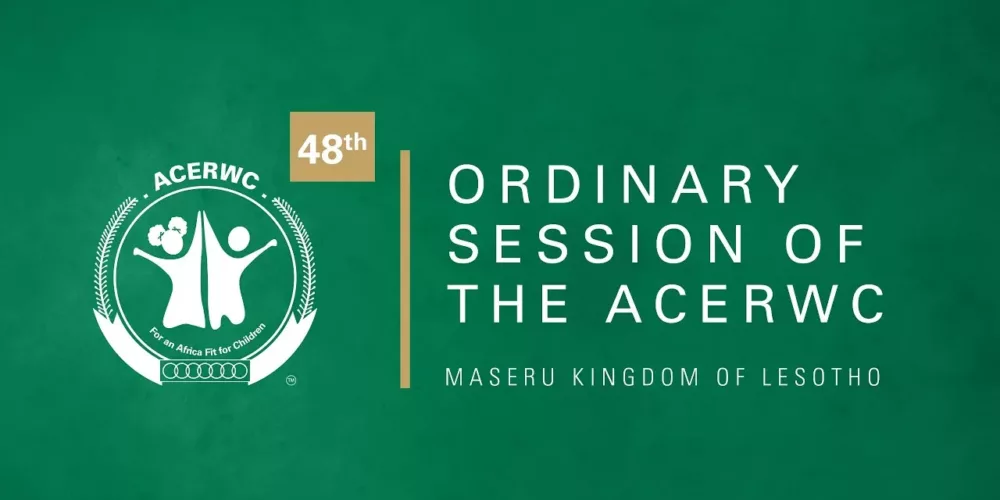
The Committee for Justice (CFJ) participated in the 48th Ordinary Session of the African Committee of Experts on the Rights and Welfare of the Child (ACERWC), held in Maseru, Kingdom of Lesotho, during which Libya’s initial report on the implementation of its obligations under the African Charter on the Rights and Welfare of the Child was considered.
This review represents the first comprehensive formal assessment of Libya’s implementation of its obligations before the African Committee since the country ratified the Charter on 23 September 2000. Libya was required to submit its initial report within two years of ratification, in 2002, but the report was not submitted until January 2026.
Accordingly, the review took place after a delay of approximately 24 years from the deadline for submitting Libya’s initial report—not 24 years after a previous review. The ACERWC officially listed Libya’s submission as an initial report among the State Party reports considered during its 48th Ordinary Session.
CFJ considers the review itself an important step, particularly given the impact of armed conflict, institutional fragmentation, displacement, irregular migration, and the deterioration of public services on children in Libya. However, the value of this process will ultimately be determined by the legislative, institutional, and practical measures that follow it and by whether those measures produce tangible improvements in children’s lives across the country.
The Committee’s Questions Highlight the Need for Comprehensive Reform
The discussions and questions raised by members of the African Committee revealed a wide range of legal, institutional, and practical challenges that continue to prevent children in Libya from fully enjoying their rights.
The Committee addressed the fragmentation of child-related provisions across numerous national laws and the resulting differences in the legal definitions and standards applied to children. It also asked about the status of the proposed new comprehensive child protection bill, which the delegation confirmed had been drafted but had not yet been adopted, the timetable for its adoption, and the measures planned to ensure its effective implementation.
Of particular concern was the absence of a consistent legal definition of a child in accordance with the African Charter, under which every person below the age of 18 is considered a child. The discussions indicated that different age thresholds are applied under different Libyan laws, potentially creating unequal levels of protection, especially in matters involving marriage, labour, criminal responsibility, detention, and access to services.
The Libyan delegation itself acknowledged discrepancies between statutory age thresholds. In particular, Article 1 of Law No. 5 of 1997 defines a child as a person under 16, highlighting the need to harmonise protections for everyone under 18.
The Committee also raised questions about the absence of a consolidated national child-focused budget that would make it possible to identify and track resources allocated to children. It sought information about the adequacy of funding for education, healthcare, social protection, and child justice, as well as the mechanisms intended to ensure that resources reach the regions and communities most affected by conflict, displacement, and marginalisation.
The delegation confirmed that child-related allocations are distributed across sectoral budgets rather than identified under a single independently traceable child-focused budget line.
The questions further addressed the lack of a unified national database containing disaggregated information on children, including data based on age, gender, disability, geographical location, and legal and social status. Without accurate and comprehensive data, the authorities cannot adequately determine needs, measure the scale of violations, allocate resources, or develop evidence-based public policies.
The delegation stated that the Higher Committee for Childhood, in cooperation with UNICEF, is developing a child-related database, while acknowledging that the system has not yet reached its intended level of completeness.
Children Affected by Armed Conflict, Displacement, and Disasters
The African Committee devoted significant attention to the situation of children affected by armed conflict and political and institutional divisions, including internally displaced children and those living in areas where access to education, healthcare, and social protection remains limited.
The Committee asked about the measures taken to protect children from killing, injury, recruitment, exploitation, and other forms of violence. It also requested information about programmes for the psychological and social recovery of affected children and their reintegration into their families and communities.
The discussions further addressed the impact of natural disasters, particularly the Derna disaster, on children who lost family members, homes, personal documents, education, and access to essential services. Questions were raised about whether emergency response plans adequately address children’s needs, facilitate family tracing and reunification, and provide affected children with psychosocial, educational, and social support.
Migrant, Refugee, and Displaced Children
The Committee raised questions about the conditions of migrant, refugee, asylum-seeking, internally displaced, and unaccompanied children in Libya. These children remain particularly vulnerable to detention, exploitation, trafficking, violence, and barriers to healthcare, education, legal assistance, and civil registration.
During the dialogue, the Committee cited figures in Libya’s report referring to more than 86,000 migrant children and asked whether they covered unaccompanied and separated children and children in shelters. This figure is attributed to the report discussed during the review, not independently verified by CFJ.
The discussions addressed Libya’s obligation to protect every child within its territory without discrimination based on nationality, migration status, or the legal status of the child’s parents or guardians.
The Committee also sought clarification regarding safeguards inside migrant detention centres, measures to prevent the immigration-related detention of children, and the availability of family-based and community-based alternatives to deprivation of liberty.
The Committee also asked about confidential reporting of abuses without fear of deportation, identification and guardianship of unaccompanied children, and family reunification where consistent with their best interests.
Child Justice and Conditions of Detention
The review addressed the child justice system and the availability of specialised courts, prosecutors, police officers, lawyers, and social workers trained to deal with children in conflict with the law.
The Committee asked whether children who are accused, prosecuted, or deprived of their liberty have timely access to legal assistance, contact with their families, healthcare, education, and age-appropriate procedural safeguards.
Although the delegation described legal and institutional arrangements for juvenile justice, such claims do not establish that safeguards are implemented in every place of detention; independently verifiable data and monitoring remain essential.
Questions were also raised about the use of alternatives to detention and other non-custodial measures, the separation of children from adults, and the conditions inside detention facilities and child care institutions.
CFJ stresses that the detention of a child must be used only as a measure of last resort and for the shortest appropriate period. All facilities in which children are deprived of their liberty must be subject to regular independent monitoring, and children must have access to safe and confidential complaint mechanisms.
Legal Identity, Nationality, and Non-Discrimination
The African Committee examined children’s right to birth registration, legal identity, and nationality, including the situation of children facing difficulties because of the absence of a parent, the loss of official documents during conflict or displacement, or discriminatory nationality rules.
The lack of registration or identity documents can effectively prevent a child from accessing education, healthcare, social protection, freedom of movement, and other fundamental rights.
The Committee also asked about the measures taken to prevent discrimination against children based on their origin, nationality, gender, disability, economic status, family circumstances, geographical location, or legal status, and to ensure equal access to protection and public services throughout Libya.
Education, Healthcare, Water, and Essential Services
The Committee addressed obstacles affecting children’s right to education, including damage to schools during armed conflict, interruptions to schooling, geographical disparities in the quality and availability of education, school dropout rates, and the inclusion of children with disabilities in mainstream education.
It also raised questions about the availability of primary healthcare, vaccinations, nutrition, mental health services, and appropriate medical and psychosocial support for children affected by violence, displacement, and disasters.
The discussions further covered children’s access to safe drinking water, sanitation, adequate nutrition, and other essential services, particularly in remote, marginalised, and conflict-affected areas.
Violence, Exploitation, and Harmful Practices
The Committee requested information about the legal and institutional measures taken to protect children from all forms of violence, including domestic violence, corporal punishment, sexual exploitation, trafficking, recruitment, forced labour, and harmful practices such as child marriage.
Reform must also address exceptions permitting marriage below 18 with judicial authorisation, while noting that the delegation described 18 as the general marriage age, although the continuing legal effect of the 2015 amendment is disputed following its reported repeal by a 2020 law. Such exceptions should not undermine effective protection against child marriage.
It also examined whether Libya has an effective national system for reporting and investigating violations, protecting victims and witnesses, prosecuting perpetrators, and providing child victims with specialised rehabilitation and psychosocial services.
The delegation referred to existing complaints bodies and efforts to strengthen child protection arrangements. CFJ therefore calls for an assessment of their independence, coordination, effectiveness and accessibility rather than assuming that no mechanism exists.
Any complaint mechanism must be accessible, safe, confidential, and adapted to children’s age and needs. Children must also be protected from retaliation, intimidation, and social stigma when they report violations.
The Need for a Comprehensive National Child Rights Law
In light of these discussions, CFJ stresses that Libya already has Law No. 5 of 1997 on the Protection of Childhood. However, its Article 1 defines a child as a person under 16, and the dispersion of child-related provisions across other legislation leaves significant inconsistencies requiring legislative reform.
CFJ therefore calls on the Libyan authorities to update the existing Law No. 5 of 1997 and urgently adopt comprehensive child rights legislation that is fully aligned with the African Charter on the Rights and Welfare of the Child, the Convention on the Rights of the Child, and other applicable regional and international standards.
The law should provide a uniform definition of a child as every person below the age of 18 and clearly enshrine the principles of the best interests of the child, non-discrimination, the right to life, survival and development, and the child’s right to express their views and participate in decisions affecting them.
It should also clearly define the responsibilities of national and local institutions, establish effective mechanisms for monitoring, complaints, investigation, remedies, and accountability, and provide enhanced safeguards for children affected by armed conflict, displacement, migration, disability, loss of family care, and deprivation of liberty.
The new law should not merely consolidate existing provisions. It must establish an integrated national child protection system supported by enforceable obligations, adequate financial resources, independent oversight, and periodic evaluation.
Good Intentions Are Not Enough
CFJ welcomes the Libyan delegation’s expressed willingness to cooperate with the African Committee, as well as the initiatives, plans, and draft legislation presented during the review.
However, addressing the accumulated challenges threatening children’s rights requires more than good intentions or declarations of commitment.
Commitments become meaningful guarantees only when they are translated into enforceable laws, adequately funded public policies, capable and unified institutions, defined implementation timelines, measurable indicators, independent oversight, and accountability for violations and failures.
Announcing programmes, committees, and national plans is insufficient unless their budgets, implementation stages, responsible authorities, intended beneficiaries, and actual impact on children’s lives can be identified and independently assessed.
Effective implementation also requires political will capable of overcoming institutional fragmentation and ensuring that the same child protection standards are applied across Libya, regardless of which authority controls a particular area or the prevailing political and security situation.
CFJ’s Recommendations
CFJ calls on the Libyan authorities to:
- Update Law No. 5 of 1997 and urgently adopt comprehensive national child rights legislation following genuine consultation with civil society organisations, independent experts, and children themselves.
- Harmonise the definition of a child across all national legislation as every person below the age of 18.
- Review existing legislation and amend all provisions that are inconsistent with the African Charter and the Convention on the Rights of the Child.
- Adopt a national action plan for implementing the concluding observations and recommendations to be issued by the ACERWC following its review of Libya’s initial report, with clearly defined priorities, responsibilities, timelines, budgets, and measurable indicators.
- Establish a unified and disaggregated national database on children, the violations affecting them, and the protection and services provided to them.
- Adopt a clearly identifiable child-focused national budget that allows public expenditure to be tracked and its impact assessed, while prioritising the most vulnerable children and underserved regions.
- Establish or strengthen an independent, coordinated, effective, accessible, safe, and child-sensitive mechanism for receiving and investigating complaints and providing effective remedies and protection against retaliation.
- End the immigration-related detention of children and develop family-based and community-based alternatives that respect their best interests.
- Ensure independent monitoring of all facilities where children are detained or placed in care and guarantee access to legal assistance, healthcare, education, psychosocial support, and family contact.
- Take urgent measures to protect children affected by armed conflict, displacement, and disasters, including rehabilitation, family reunification, and social reintegration programmes.
- Remove barriers to birth registration, legal identity, and nationality and ensure every child’s right to a legal identity without discrimination.
- Publish Libya’s national report and the ACERWC’s concluding observations and make information on implementation plans and progress publicly accessible.
CFJ reiterates its readiness to cooperate with the African Committee, Libyan institutions, independent civil society organisations, and other relevant actors in following up on the implementation of the Committee’s recommendations and supporting the development of a comprehensive national legal framework for children’s rights.
Children in Libya do not need further promises or legal texts that remain unimplemented. They need protection that reaches them in their homes, schools, hospitals, care institutions, detention facilities, and communities affected by conflict and displacement.
This review should mark the beginning of a serious national process that translates regional and international obligations into measurable results, closes the gap between law and practice, and guarantees every child in Libya the rights to protection, justice, dignity, and a safe future without discrimination.