

Abidjan, Côte d’Ivoire | 7 May 2026
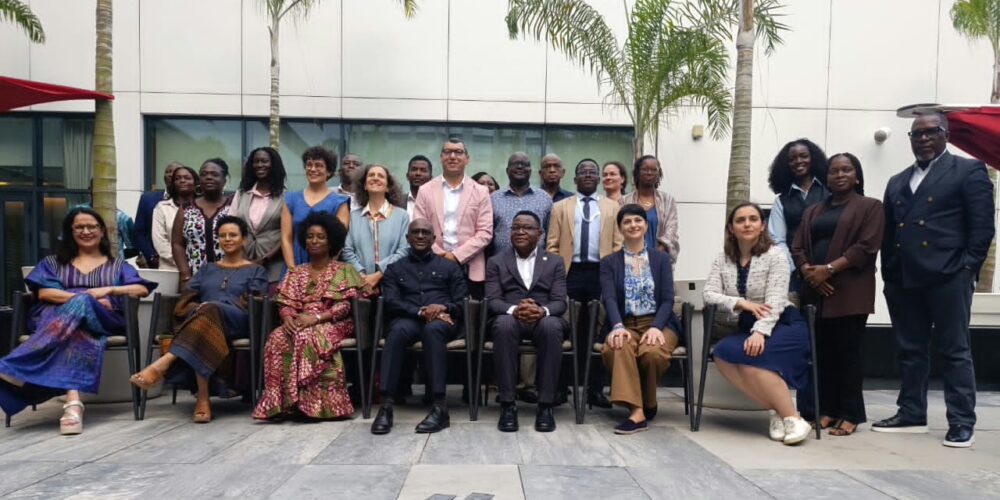
The Executive Director of the Committee for Justice (CFJ), Ahmed Mefreh, participated in a high-level peer-to-peer exchange meeting held on the sidelines of the session of the United Nations Working Group on Enforced or Involuntary Disappearances in Abidjan, Côte d’Ivoire.
The high-level meeting brought together representatives of regional and international human rights mechanisms, including the President of the African Court on Human and Peoples’ Rights, the Chairperson of the African Commission on Human and Peoples’ Rights, a representative of the African Committee of Experts on the Rights and Welfare of the Child, members of the United Nations Working Group on Enforced or Involuntary Disappearances, and a representative of the Office of the United Nations High Commissioner for Human Rights.
The meeting gathered African and United Nations human rights mechanisms, civil society representatives, and human rights actors to exchange experiences and lessons learned, and to discuss ways to strengthen cooperation and complementarity between international and regional mechanisms, particularly in cases related to enforced disappearance and other serious human rights violations.
In his remarks, CFJ’s Executive Director emphasized the importance of peer-to-peer exchange as a practical space for learning, building trust, and strengthening coordination between civil society organizations and human rights mechanisms.
Mr. Mefreh stressed that victims, families, affected communities, and civil society organizations should not be viewed only as sources of information, but as essential partners in the work for justice, protection, and accountability.
He also highlighted the importance of the Addis Ababa Roadmap as an important framework for strengthening cooperation between United Nations human rights mechanisms and African human rights mechanisms.
He underlined that this cooperation cannot be effective without the meaningful participation of civil society, especially in bringing field realities to the attention of mechanisms, documenting violations, identifying victims’ priorities, and following up on the implementation of recommendations and decisions.
In his speech, Mr. Mefreh stated:
“Civil society can help these mechanisms understand the real situation on the ground. We can bring cases, evidence, testimonies, and urgent protection concerns. We can also help follow up on recommendations and decisions, so they do not remain only words on paper.”
The Committee for Justice emphasized that peer-to-peer exchange helps civil society organizations avoid duplication, improve coordination, and share practical tools related to documentation, referrals, victim protection, and engagement with regional and international mechanisms.
CFJ further stressed that civil society plays a central role as a bridge between victims and mechanisms, between local realities and international action, and between documentation and real protection. It also emphasized that the Addis Ababa Roadmap should not remain only a formal framework, but should become a practical tool that supports victims, strengthens access to justice, and enhances cooperation between United Nations and African mechanisms.
CFJ’s participation in this meeting forms part of its broader work to strengthen engagement between civil society, United Nations Special Procedures, and African human rights mechanisms, and to support more effective, coordinated, and victim-centered responses to enforced disappearances and serious human rights violations.