

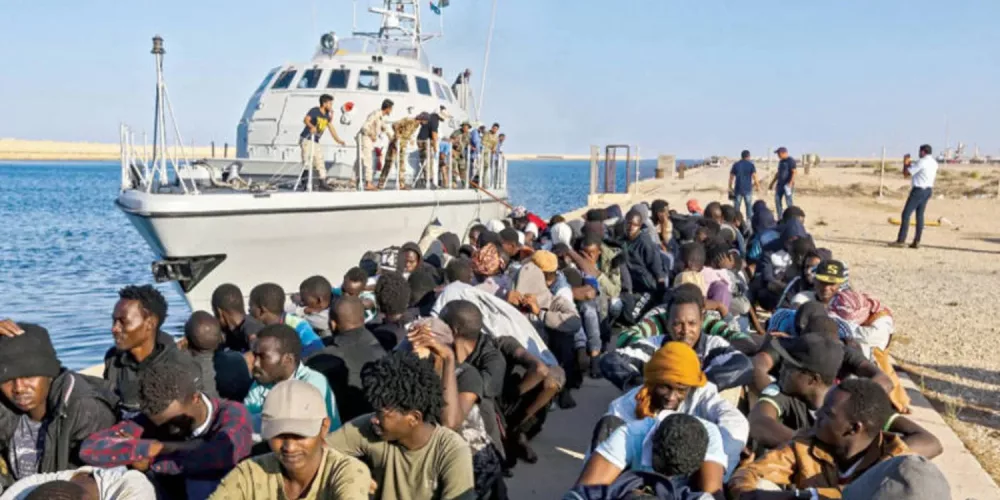
A joint report issued by the UN High Commissioner for Human Rights (OHCHR) and the UN Support Mission in Libya (UNSMIL) has revealed that migrants, refugees, and asylum seekers in Libya are subjected to grave and systematic violations, including killings, torture, sexual violence, and human trafficking—described in the report as a “business as usual” model built on exploiting the suffering of the most vulnerable groups.
Covering the period from January 2024 to December 2025, the report draws on interviews with nearly 100 migrants and refugees from 16 countries across Africa, the Middle East, and South Asia. It documents what it describes as a “model of exploitation”, in which human trafficking networks intersect with actors linked to Libyan authorities and external criminal groups.
Arbitrary Detention, Enslavement, and Sexual Violence
According to the report, migrants are often abducted or arrested at gunpoint and transferred to official and unofficial detention facilities without due process, amounting to arbitrary detention. Within these facilities, they are subjected to enslavement, torture, ill-treatment, forced labor, forced prostitution, rape, extortion for ransom, and the confiscation and resale of their belongings and identity documents.
The report includes harrowing testimonies from women who were repeatedly raped, including an Eritrean woman held for more than six weeks in a human‑trafficking house in Tobruk, where she endured multiple rapes and witnessed girls as young as 14 years old being raped daily. She was released only after her family paid a ransom. The report also documented the death of one victim from severe hemorrhaging following violent sexual assaults.
Dangerous Interceptions at Sea and Mass Expulsions
The report also addresses attempts to cross the Mediterranean, noting that maritime interceptions by Libyan entities frequently involve dangerous maneuvers, threats, and excessive use of force, putting migrants’ lives at risk. Those intercepted are often forcibly returned to Libya, where they face the same cycle of violations.
The report further condemned mass expulsions from Libya to neighboring countries without any individual assessment of protection needs, describing these practices as violations of international human rights law and refugee law, depriving people of their right to seek asylum and exposing them to refoulement, abandonment at borders, and life‑threatening conditions without food, water, or medical care.
Urgent Calls for Accountability and Suspension of Returns to Libya
UN High Commissioner for Human Rights Volker Türk described the treatment of migrants in Libya as an “endless nightmare” fueled by trafficking networks and those benefiting from a system of exploitation. The UN Secretary‑General’s Special Representative for Libya, Hanna Tetteh, stressed that detention facilities have become breeding grounds for severe human rights abuses.
The report calls on Libyan authorities to immediately release all arbitrarily detained individuals, halt dangerous interception practices, decriminalize irregular entry, stay, and exit, eliminate all forms of contemporary slavery and human trafficking, and ensure accountability.
It also urges the international community—including the European Union—to suspend all interception and return operations to Libya until effective human rights safeguards are in place, to impose strict due‑diligence requirements on any funding, training, or support provided to Libyan entities, and to link any assistance to concrete compliance with international human rights standards.
CFJ’s Position
The Committee for Justice (CFJ) stresses that the violations documented in the UN report reveal a dangerous and systematic pattern of abuses that may amount to international crimes requiring criminal accountability. CFJ warns that the continued detention of migrants in unsafe environments and their forced return to Libya place the international community before direct legal and moral responsibility.
CFJ calls for independent and transparent investigations into all documented violations, protection for victims and survivors, and the cessation of any support or cooperation with entities proven to be involved in grave abuses—ensuring respect for human dignity and the right of every person to safety and protection.