

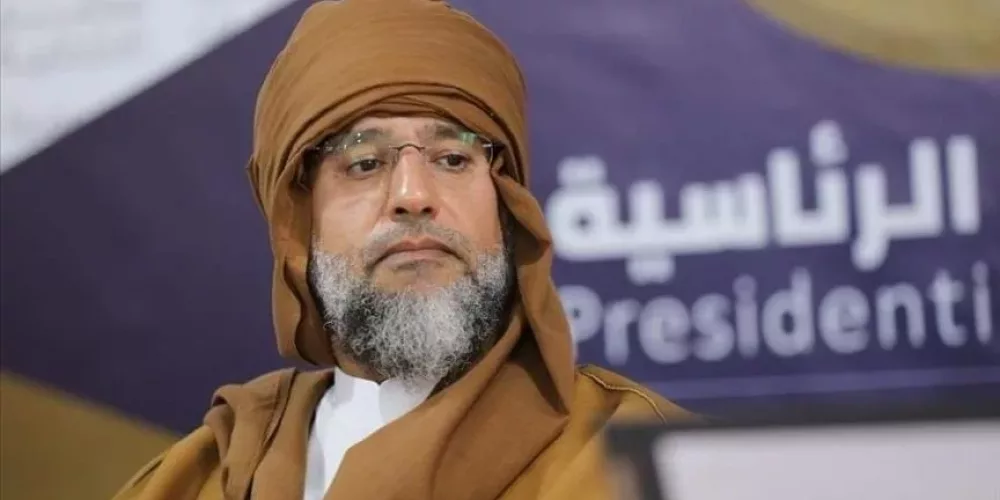
The Committee for Justice (CFJ) has documented the killing of Saif al‑Islam Muammar Gaddafi on 3 February near the city of Zintan, following an armed attack targeting his residence. The incident raises serious concerns about a possible extrajudicial killing and constitutes a grave violation of the right to life as guaranteed under national laws and international human rights instruments.
The United Nations Support Mission in Libya (UNSMIL) expressed deep dismay over the incident in its official statement, stressing that the killing undermines the rule of law and threatens peace and security. The Mission called for a prompt and transparent investigation, accountability for those responsible, and an end to the pattern of targeted violence and assassinations.
CFJ also welcomes the announcement by the Office of the Public Prosecutor in Libya regarding the opening of an investigation into the incident. Prosecutors visited the crime scene, examined the victim’s body in coordination with forensic doctors and technical experts, and confirmed that he sustained fatal gunshot wounds. Relevant authorities have begun collecting evidence and identifying the circle of suspects.
CFJ affirms that extrajudicial killing—regardless of its motives or context—constitutes one of the most serious human rights violations. It undermines the foundations of justice, entrenches a climate of impunity, and fuels cycles of violence and instability in Libya. This killing reflects a profound failure to ensure a judicial process capable of uncovering the truth and ensuring accountability for past violations—an inherent right of the Libyan people. Ending recurring violations remains tied to establishing social stability and adopting inclusive approaches to address the legacy of violence and division.
Political killings further destabilize the public sphere, heightening social tensions, fueling anger and fragmentation, and potentially triggering civil unrest—especially in contexts marked by institutional and security fragility. The continued failure to hold perpetrators accountable entrenches mistrust and threatens social security as well as prospects for long‑term stability.
CFJ stresses that the state’s responsibility extends beyond initiating formal investigations. It must ensure that investigations are independent, impartial, effective, capable of uncovering the full truth, and lead to holding all perpetrators accountable—whether direct perpetrators, instigators, or accomplices—without exception.
CFJ calls on the competent Libyan authorities to guarantee full transparency in the investigation process, enable public access to its findings, and put an end to assassinations and extrajudicial killings. Doing so is essential to upholding the rule of law, protecting the right to life, and achieving genuine stability and reconciliation in the country.