

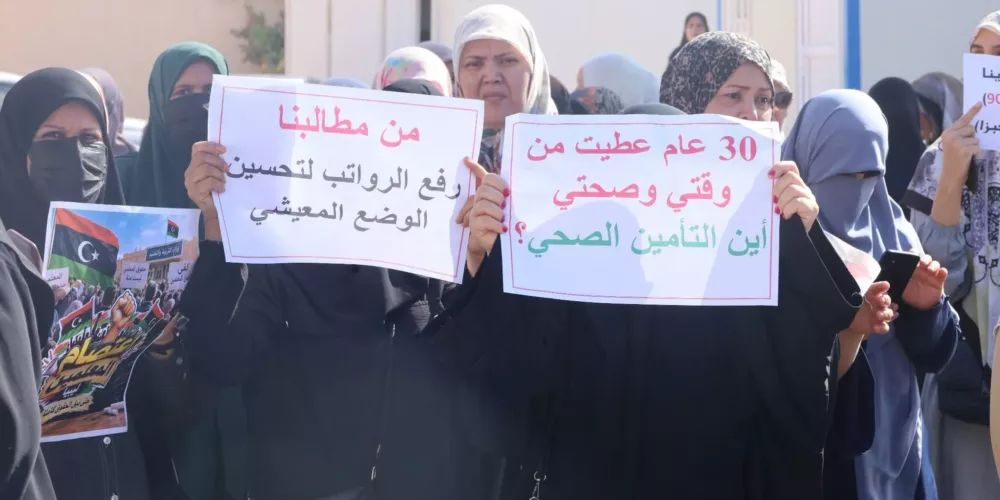
The Committee for Justice (CFJ) has documented the widening scope of protests by teachers across several Libyan municipalities over financial and professional demands. Teachers in Tajoura announced the continuation of their sit-in and the suspension of classes in educational institutions throughout the municipality until their demands are fully addressed and their rights guaranteed.
The protest movement has also expanded to the Education Monitoring Office in Zawiya, where teachers organized sit-ins and closed the office’s headquarters, declaring the continuation of a general strike until their demands are met. Similar protests and sit-ins were reported in the municipality of Al-Asabaa, reflecting the growing participation of education sector workers across different regions of the country.
According to available information, the teachers’ key demands include:
- Improving their living and economic conditions.
- Securing fair financial compensation and salary improvements.
- Implementing existing laws and decisions related to teachers’ rights.
- Addressing unresolved employment and professional issues.
- Opening a serious dialogue with teachers’ representatives and establishing a clear timeline for implementing their demands.
The Committee for Justice emphasized the importance of addressing teachers’ demands seriously, noting that these concerns are directly linked to the professional rights and living conditions of education workers. CFJ stressed the need for practical solutions that can prevent the prolonged disruption of education and contribute to the stability of the educational process.
CFJ calls on the relevant Libyan authorities to engage in a serious and constructive dialogue with representatives of teachers, respond to their legitimate demands through clear mechanisms and a defined implementation timetable, and enforce legislation and decisions related to their rights. The Committee further urges measures that improve teachers’ living conditions, safeguard their professional dignity, and ensure the continuity and stability of educational services.