


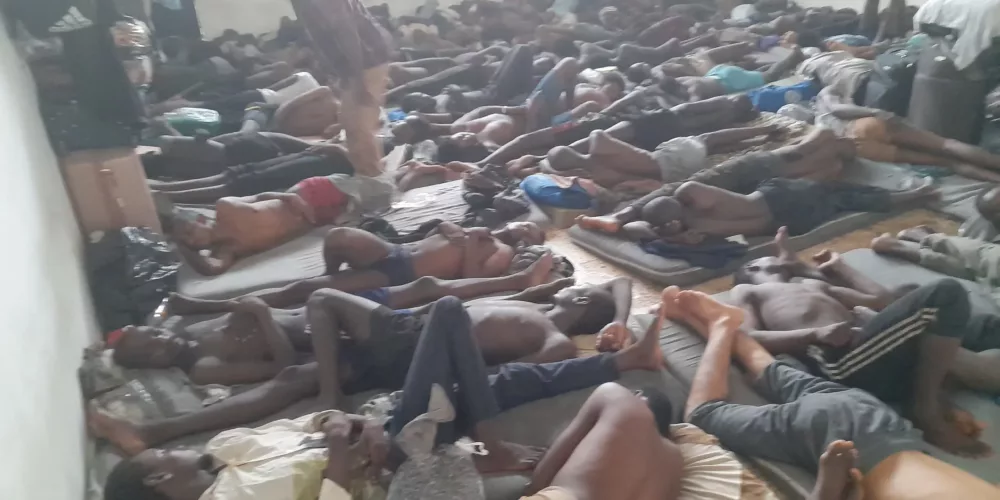
The Committee for Justice (CFJ) has documented deteriorating humanitarian and health conditions facing Sudanese refugees and migrants detained in Qanfouda Prison in the city of Benghazi, eastern Libya. Reports indicate prolonged periods of detention, the spread of diseases and insects, inadequate hygiene and healthcare, as well as allegations that some detainees have been subjected to torture and ill-treatment.
According to information documented by CFJ, Qanfouda Prison holds approximately 2,000 Sudanese detainees distributed across several detention wards, including women, children, and entire Sudanese families. Detainees reportedly endure harsh living conditions characterized by inadequate nutrition, insufficient medical care, the spread of infectious diseases, and psychological distress, while some individuals have remained in detention for two years or longer.
Testimonies from former detainees indicate that acts of abuse and torture have occurred inside the prison, including beatings resulting in injuries and fractures. Available information also suggests that some Sudanese detainees have been involved in guarding detention sections, distributing food, and committing abuses against fellow detainees. Reports further indicate deaths among Sudanese detainees inside the prison, including the death of Ahmed Bishara, known as “Ahmed Ajdabiya,” in the prison’s second ward.
These developments come against the backdrop of Libyan Government Decision No. (113) of 2026, which prohibited the entry of nationals of Sudan, Eritrea, Ethiopia, and Somalia into Libyan territory through official border crossings and provided for the deportation of individuals who do not possess valid residency permits.
The Committee for Justice calls on the Libyan authorities to allow international organizations and independent medical missions access to Qanfouda Prison and all detention facilities holding Sudanese nationals. CFJ also calls for an independent investigation into allegations of torture, ill-treatment, and deaths in custody, the release of individuals subjected to arbitrary detention, and the acceleration of deportation procedures for those who meet the relevant conditions in a safe and dignified manner, while ensuring that no individual is subjected to forcible return (refoulement).