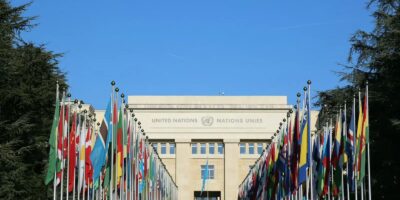


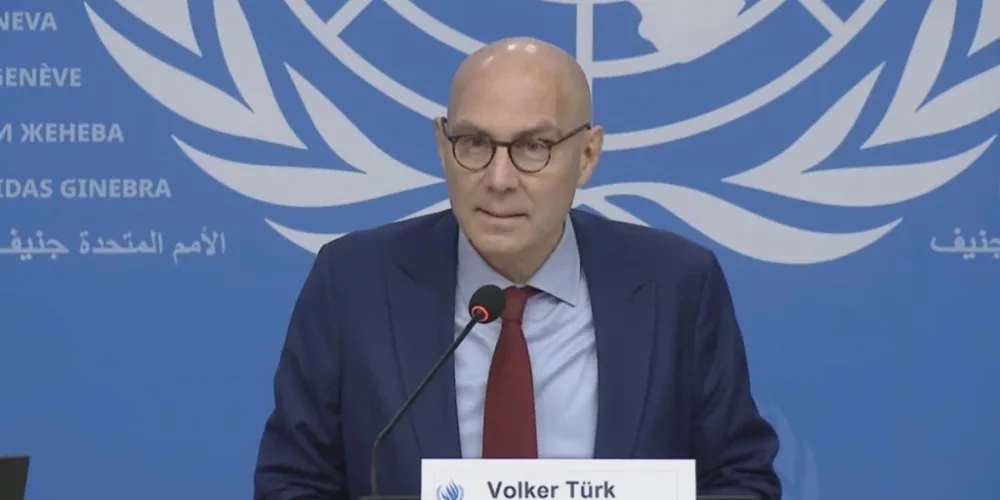
The Committee for Justice (CFJ) reports that the UN Human Rights Council in Geneva held an interactive dialogue on the oral update by the UN High Commissioner for Human Rights regarding the situation in El‑Fashir and its surrounding areas, amid the ongoing armed conflict in Sudan. The session featured strong UN warnings over escalating atrocities against civilians and diverging views among participating states on accountability and protection mechanisms.
This dialogue follows the High Commissioner’s recent visit to Sudan, during which he conducted on‑the‑ground assessments in El‑Fashir and heard testimonies from survivors and victims of violations. His findings prompted an urgent briefing before the Human Rights Council to outline the latest developments, evaluate protection concerns, and assess grave violations of international humanitarian law and international human rights law.
UN Warning of “the Worst Yet to Come”
UN High Commissioner Volker Türk warned that Sudan is heading toward even more horrific atrocities unless urgent measures are taken to stop the bloodshed. He called for the expansion of the arms embargo on Darfur to include all of Sudan, citing the continuous flow of weapons that fuels mass crimes.
Türk shared harrowing testimonies from victims and survivors of events in El‑Fashir, describing mass killings of hundreds of civilians, including displaced persons sheltering at the University of El‑Fashir. He highlighted indications of ethnically targeted violence, particularly against members of the Zaghawa community. His findings align with conclusions from the International Criminal Court, which has determined that war crimes and crimes against humanity have been committed in the city.
The High Commissioner also warned of rising civilian casualties from the use of drones by parties to the conflict, along with the risks of summary executions, sexual violence, arbitrary detention, and family separation, all within a humanitarian crisis affecting over 30 million people.
CFJ Welcomes UN Monitoring and Emphasizes Urgency
CFJ welcomed the UNSCHR’s efforts in documenting serious violations in and around El‑Fashir and commended the High Commissioner’s public briefing, which underscored the gravity of the current phase and the scale of crimes committed against civilians.
The committee stated that the patterns emerging in El‑Fashir—including mass killings, ethnic targeting, and unlawful and excessive use of weapons—constitute grave breaches of international law and require immediate global action that goes beyond expressions of concern.
CFJ Highlights Key Priorities
- Ensuring Accountability and Ending Impunity
CFJ urged the international community to support ongoing investigations by the International Criminal Court, strengthen the mandate of the UN Fact‑Finding Mission on Sudan, and ensure unimpeded access to victims and information.
- Protecting Civilians Immediately
The committee emphasized the need for:
- An immediate ceasefire
- Unrestricted humanitarian access
- Prohibition of attacks on civilian areas and infrastructure
in line with the Geneva Conventions and customary IHL.
- Security Council Action
CFJ called on the UN Security Council to fulfill its responsibilities under the UN Charter and consider urgent measures to halt the flow of weapons to warring parties—consistent with the imperative to protect civilians and prevent further atrocities.
The Egyptian Position
Egypt welcomed the High Commissioner’s visit and highlighted the gravity of abuses in El‑Fashir and Kordofan, condemning attacks on humanitarian convoys and medical facilities. Cairo reaffirmed its support for Sudan’s unity and sovereignty, called for a humanitarian pathway ensuring aid access, and stressed that the establishment or expansion of UN mechanisms must be based on the consent of the concerned state.
Escalating Violations Against Refugees in Egypt
CFJ also notes with alarm a surge in violations against Sudanese migrants and refugees in Egypt in recent weeks, including:
- Arbitrary arrests from streets and homes
- Detention in harsh conditions
- Reports of children detained with adults
- Allegations of extortion in exchange for release
- Forced evictions and coerced departures
- Serious concerns regarding violations of non‑refoulement
CFJ has documented several deaths inside detention facilities, including:
- The death of Al‑Nazeer Al‑Sadiq inside Badr Police Station after 25 days of detention despite valid residency papers.
- The death of Mubarak Qamar Al‑Din Abu Hawwa (67) inside El‑Shorouk Police Station despite carrying a valid UNHCR card and renewed residency paperwork.
- The death of Mohamed Adam Youssef, whose body was found in a Cairo morgue after his arrest, with family members alleging signs of torture.
These incidents collectively illustrate a growing climate of fear and uncertainty among thousands of Sudanese families residing in Egypt—many of whom fled armed conflict and now face risks that require urgent legal and humanitarian safeguards.


![Senegal flag [Flickr]](https://www.cfjustice.org/wp-content/uploads/2026/04/7383560892_e7bb9b645f_h-400x200.jpg "7383560892_e7bb9b645f_h")