


The Committee for Justice (CFJ) welcomes the press release issued by United Nations special rapporteurs calling on Egypt to immediately lift all restrictions imposed on human rights defenders who have been formally released from detention yet continue to face punitive administrative and security measures.
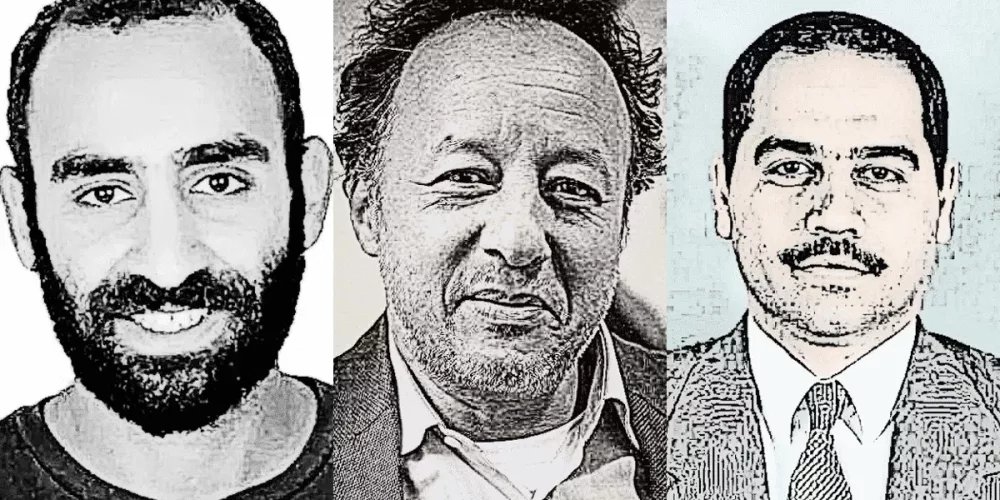
The UN experts’ press release highlights that a number of defenders, Gasser Abdel Razek, Karim Ennarah and Mohamed Bashir, three members of the Egyptian Initiative for Personal Rights (EIPR), despite having served their sentences or having been ordered released by judicial authorities, remain subjected to travel bans, asset freezes, police surveillance, probationary measures, and other forms of control. The experts noted that these practices amount to continued punishment and are incompatible with Egypt’s obligations under international human rights law.
Human rights lawyer Mohamed El-Baqer was detained in connection with several cases involving similar charges. During his incarceration in late 2020, his name was added to Egypt’s terrorism watchlist for a period of five years, leading to a travel ban, withdrawal of his passport, and freezing of his bank account and other assets. El-Baqer received a presidential pardon in 2023, but he has remained on the terrorism watchlist.
“What makes it all the more shocking is that, just one day before the end of the five-year period, El-Baqer was added to the terrorist list for another five years, despite no evidence being provided,” the experts said.
CFJ notes that such restrictions are not isolated measures but form part of a broader, entrenched pattern aimed at systematically undermining human rights defenders and curtailing independent civil society. Based on CFJ’s documentation, many released defenders are effectively prevented from resuming their professional and personal lives, accessing employment and healthcare, or participating in public affairs, while remaining under constant threat of re-arrest or renewed prosecution through similar charges.
Within this context, the Committee for Justice stresses that the persistence of restrictive measures following release constitutes a continuation of arbitrary punishment beyond the period of detention. By maintaining travel bans, asset freezes, and security supervision, the authorities transform release into a conditional status devoid of its legal meaning. These practices amount to arbitrary interference with fundamental rights, including freedom of movement, privacy, work, and the freedoms of expression and association, and are inconsistent with international standards binding on Egypt.
CFJ further emphasizes that genuine compliance with international human rights obligations requires not only the formal release of detained defenders, but the full restoration of their legal status and rights. The continued use of administrative and security measures to restrict released individuals reflects a deliberate strategy to silence human rights defenders and to sustain a climate of intimidation within civic space.





![Senegal flag [Flickr]](https://www.cfjustice.org/wp-content/uploads/2026/04/7383560892_e7bb9b645f_h-400x200.jpg "7383560892_e7bb9b645f_h")