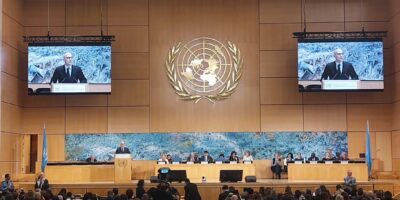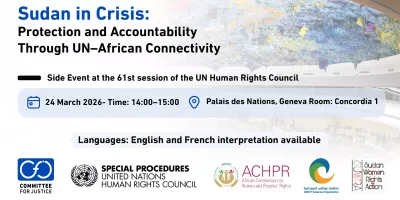


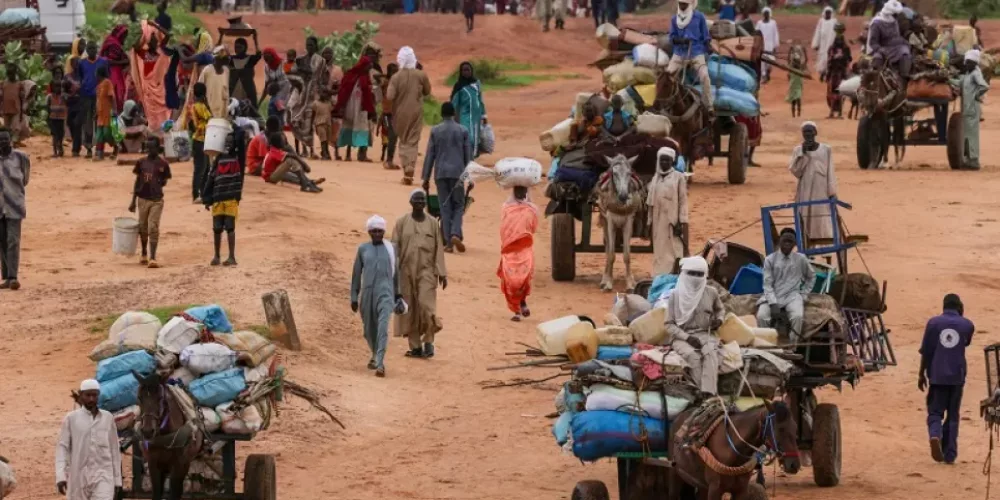
The AWAFY Sudanese Organization and Committee for Justice (CFJ) submitted a joint report on 27 February 2026 to respond to the Special Rapporteur’s call for input on summary, extrajudicial or arbitrary executions. The report contained findings documenting widespread summary executions, extrajudicial killings, torture-related deaths in detention, and ethnically targeted attacks across Sudan amid the ongoing armed conflict since April 2023.
Drawing on structured interviews conducted throughout 2025 and early 2026, including documentation gathered, the organizations warn that unlawful deprivation of life has become systematic in several conflict-affected regions, particularly in Darfur and Kordofan
Widespread Executions and Civilian Targeting:
AWAFY documented patterns in and around El Fasher, between 22–30 October 2025, included individual and mass summary executions ranging from 4 to over 200 victims in single incidents that were committed by the Rapid Support Forces (RSF). For instance, we documented extrajudicial executions near the Faculty of Engineering at the University of El Fasher, in residential neighborhoods, near medical facilities, and along roads and checkpoints.
On 23 January 2026, CFJ documented a drone strike hit a civilian market in Abu Zaimah, North Kordofan, killing five civilians and injuring at least thirty, including women and children.
On 29 January 2026, CFJ documented the killing of fifteen civilians during a funeral gathering in Al-Ruwaikiba, South Kordofan, when a cemetery was struck during burial rites.
Across Darfur and Kordofan, more than sixty civilian deaths linked to drone strikes have been documented. Attacks on journalists and health facilities have also been recorded, including the killing of fourteen journalists in 2025 and an assault on a health center that resulted in eight civilian deaths.
Torture, Secret Detention and Deaths in Custody:
More than 33 structured interviews conducted between February 2025 and January 2026 reveal patterns of arbitrary detention in unofficial and undisclosed locations, including forests, farms, former prisons and secret buildings. Detainees reported denial of access to lawyers and families from the first hours of detention, absence of independent medical examinations, and interrogations conducted without audio or video recording.
In cases documented at Daqris Prison in Nyala, families were informed of deaths without disclosure of cause, autopsy reports, or investigative findings. Survivors described prolonged abuse, coercion, forced confessions, ransom demands of up to 10 million Sudanese pounds, and repeated arrests. Detention periods ranged from several hours to nine months.
Multiple testimonies describe torture methods intended to extract confessions or punish individuals based on ethnicity, profession, or perceived political affiliation. Victims reported being targeted at checkpoints controlled by the Rapid Support Forces (RSF), accused of affiliation with the army, joint forces, or political parties, and subsequently executed without judicial process.
Ethnically Targeted Killings:
By conducting interviews with many survivors and victims, AWAFY and CFJ’s monitoring indicates that non-Arab ethnic communities – including Masalit, Fur, Zaghawa and other African groups – have been targeted and killed in El-Fasher and its surroundings. In Karnoi, North Darfur more than 300 civilians were reportedly killed on 2 January 2025 on ethnic grounds. Ethnic profiling at checkpoints and escalation of torture upon identification of tribal affiliation were consistently documented.
Families from minority communities face heightened obstacles in retrieving remains, filing complaints, or accessing official documentation. Fear of reprisal in RSF-controlled areas has further silenced survivors and obstructed accountability efforts.
Structural Impunity and Lack of Accountability:
The findings indicate an almost complete absence of effective investigative mechanisms in conflict-affected areas. There is:
- No centralized public registry of conflict-related deaths.
- No publicly accessible prosecutorial authority functioning independently.
- No independent complaint or witness protection mechanisms.
- No disclosure of disciplinary or criminal accountability measures.
- No comprehensive reparations framework for victims
The lack of forensic transparency, rapid burials under insecurity, interference with burial practices, and intimidation of families compound the harm and undermine the rights to truth, justice and reparation.
Recommendations and calls for Immediate Action:
The Committee for Justice and AWAFY Sudanese Organization call for:
- An immediate halt to all extrajudicial killings and summary executions in El Fasher and across conflict zones in Sudan.
- Independent, impartial and transparent investigations into all documented cases, with participation of international forensic experts and public disclosure of findings.
- A freeze on arbitrary death sentences and systematic review of existing sentences in line with international human rights standards.
- Unhindered access for independent monitoring bodies, including the UN Fact-Finding Mission on Sudan, and protection for civil society actors and witnesses from reprisals.
- Comprehensive reparations for victims and families, including restitution, compensation, rehabilitation and guarantees of non-recurrence.
The AWAFY and CFJ stress that the ongoing pattern of unlawful killings, torture and discriminatory targeting represents a grave assault on human dignity and the right to life. Without urgent international engagement and credible accountability mechanisms, impunity will continue to fuel further atrocities.
Skip to PDF content