

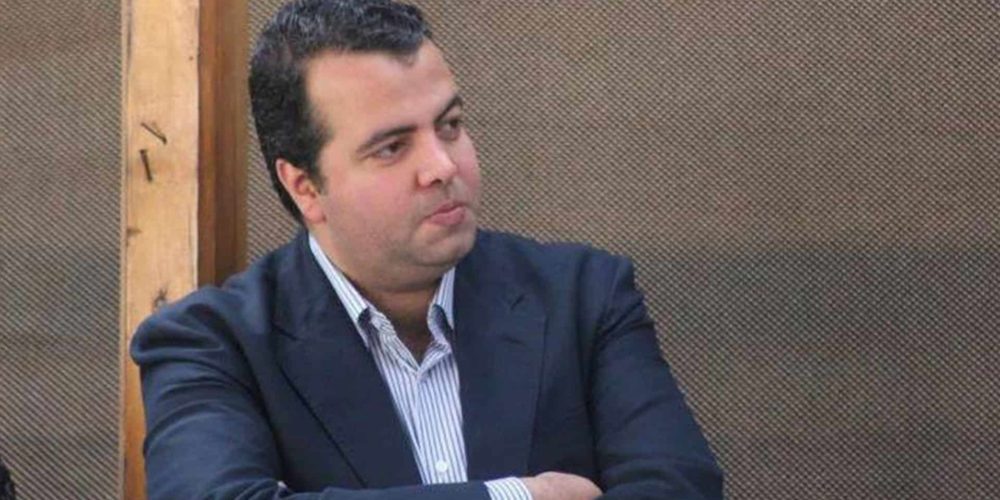
The Committee for Justice is closely following with grave concern the developments related to the fate of Egyptian political activist and former parliamentarian Mostafa El-Nagar, who has been out of contact since September 2018, under circumstances that remain unclear and raise serious concerns about his possible enforced disappearance or extrajudicial killing.
Mostafa El-Nagar had informed his wife, days before a court session in which he was being tried alongside others in the case known in the media as the “insulting the judiciary” case, that he was present in the city of Aswan in southern Egypt. Days after contact with him was cut off, his wife received a phone call at their home from an unknown person, who stated that Mostafa had been arrested, without providing any additional information regarding his place of detention or the authority that carried out the arrest.
Since that time, the Egyptian authorities have not issued any official statement clarifying the fate of Mostafa El-Nagar, nor have they enabled his family or lawyers to communicate with him or to know his whereabouts, in a violation of the right to liberty and personal security, and of the guarantees of a fair trial stipulated in the Egyptian Constitution and international instruments.
The seriousness of this case has increased in light of what has recently circulated in the media, where Mohamed El-Baz – an Egyptian media figure close to the authorities – stated that Mostafa El-Nagar had been killed on the Sudanese border while attempting to flee the country in order to avoid the issuance of a verdict against him in the “insulting the judiciary” case.
While the Committee for Justice affirms that these statements – despite their seriousness – do not rise to the level of an official statement, they nevertheless raise pressing questions about the fate of Mostafa El-Nagar and about the continued silence of the authorities regarding his case for more than eight years. The Committee for Justice stresses that the circulation of such allegations through media outlets close to the authorities, without any official denial or clarification by the competent bodies, places double legal responsibility on the State and constitutes an additional indication of a failure to fulfill its duty of transparency and to protect the right to life.
CFJ submitted a complaint concerning Mostafa El-Nagar to the United Nations Working Group on Enforced or Involuntary Disappearances in 2019, and submitted a further complaint in early 2025, as part of its ongoing follow-up of the case and its efforts to uncover his fate and to ensure his and his family’s right to truth and justice. The Working Group on Enforced or Involuntary Disappearances included the case in its official communications with the Egyptian government, as reflected in its report issued under reference number A/HRC/WGEID/135/1.
Despite these communications issued by a specialized United Nations mechanism, the Egyptian authorities have refrained from providing any response or clarification regarding the fate of Mostafa El-Nagar, in clear breach of their obligations to cooperate with United Nations mechanisms, particularly in light of the allowance of the circulation of allegations concerning his “killing” through media outlets close to the security services, without issuing any official statement to deny or clarify such allegations.
The continuation of official ambiguity, in contrast with leaks and undocumented media statements, reinforces fears that Mostafa El-Nagar has been subjected to grave violations and undermines confidence in the commitment of the Egyptian authorities to their legal and humanitarian responsibilities.
Grave Violations of International Law in the Case of Mostafa El-Nagar
The available facts in the case of Mostafa El-Nagar indicate the commission of grave and ongoing violations of international human rights law, foremost among them the crime of enforced disappearance, as defined in the International Convention for the Protection of All Persons from Enforced Disappearance, which is considered one of the most serious composite violations due to the arbitrary deprivation of liberty it entails, the denial of the fate or whereabouts of the person concerned, and placing him outside the protection of the law.
The Egyptian authorities’ refusal since 2018 to disclose the fate of Mostafa El-Nagar, or to provide his family and lawyers with any official information about him, constitutes a direct violation of the right to liberty and personal security, the prohibition of arbitrary detention, and the right to recognition as a person before the law. This conduct also constitutes a serious breach of fair trial guarantees, including the right to defense and the right to communicate with one’s lawyer and family.
If the circulated allegations regarding his killing outside the framework of the law are proven to be true, this would amount to an extrajudicial killing, constituting a blatant violation of Article 3 of the Universal Declaration of Human Rights (“the right to life”) and Article 6 of the International Covenant on Civil and Political Rights, which Egypt ratified in 1982. The right to life is a non-derogable right, and requires a prompt, independent, and effective investigation and the accountability of the perpetrators.
The Committee for Justice affirms that the crime of enforced disappearance, by its continuous nature, is not subject to statutes of limitation, and that the State bears full legal responsibility as long as it fails to disclose the fate of the disappeared person, investigate the violations committed, or ensure accountability and reparations for victims and their families, in accordance with its international obligations.
The Committee for Justice calls on the Egyptian authorities to:
- Immediately and officially disclose the fate of Mostafa El-Nagar, and clarify whether he is alive or not.
- Reveal his place of detention, should he be detained, and enable his family and lawyers to communicate with him immediately.
- Open an independent and transparent investigation into the circumstances of his disappearance since 2018 and the recent allegations regarding his killing.
- End the policy of silence and denial in cases of enforced disappearance, and ensure that those responsible for such violations are not granted impunity.
The Committee for Justice affirms that the right to know the truth is an inherent right of victims and their families, and that ignoring the fate of Mostafa El-Nagar, or relying solely on unofficial media narratives, constitutes a grave violation of the rule of law and of Egypt’s international human rights obligations.