


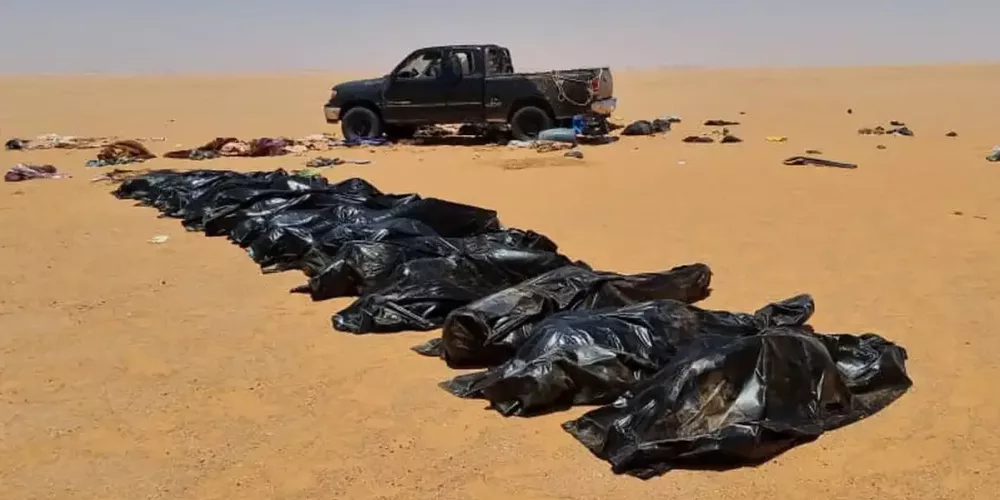
The Committee for Justice (CFJ) expresses deep concern over emerging reports regarding the discovery of secret detention sites and mass graves suspected of containing the remains of migrants in several areas across eastern and southeastern Libya. These findings reflect yet another alarming indication of the scale of grave violations endured by migrants and asylum seekers in the country.
According to available information, unofficial detention facilities have been uncovered, including an underground site in the Kufra region, where hundreds of migrants—including women and children—had been held in harsh and inhumane conditions. Recent operations led to the release of more than 200 individuals who were being unlawfully detained, amid disturbing reports of mistreatment and denial of basic rights.
CFJ is also deeply alarmed at reports of a mass grave discovered near Ajdabiya, containing the remains of at least 21 individuals, following a security operation at a location suspected of being used to detain migrants. The committee extends its condolences to the families of the victims and stresses that these incidents constitute a serious violation of the right to life and human dignity.
CFJ welcomed the actions that resulted in the discovery of these sites, the release of detainees, and the beginning of preliminary investigations into the perpetrators, including legal proceedings against individuals involved in human trafficking and migrant smuggling networks. However, the committee stresses that such steps remain insufficient unless followed by comprehensive and transparent investigations that ensure accountability for all perpetrators without exception.
CFJ unequivocally condemns human trafficking, arbitrary detention, and cruel, inhuman, or degrading treatment, noting that such acts constitute grave violations of the African Charter on Human and Peoples’ Rights, particularly the rights to life, dignity, liberty, and personal security.
The committee affirms that Libyan authorities bear a direct legal responsibility to prevent such violations, protect all individuals within their jurisdiction, and ensure prompt, independent, and impartial investigations that preserve evidence, identify victims, notify their families of their fate, and bring perpetrators—including members of organized and cross‑border criminal networks—to justice.
CFJ also stresses the importance of abiding by regional and international standards relating to the protection of migrants, including the African human rights principles governing migrants, refugees, and asylum seekers, and ensuring the dignified recovery, identification, and treatment of remains.
In this context, CFJ calls on Libyan authorities to:
Intensify efforts to uncover all secret detention sites and ensure their permanent closure, dismantling the criminal networks responsible for their operation.
Provide immediate medical, psychological, social, and legal assistance to survivors, with special attention to women and children.
Establish effective mechanisms for the protection of victims and witnesses, ensuring their right to justice and reparations.
Strengthen regional and international judicial and security cooperation to combat human trafficking and migrant smuggling.
Finally, CFJ urges the African Union, regional bodies, and the international community to enhance support efforts aimed at protecting migrants, promoting human‑rights‑based policies, and addressing root causes that leave thousands vulnerable to exploitation and trafficking networks.