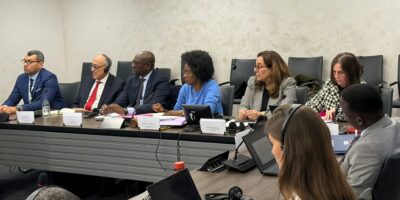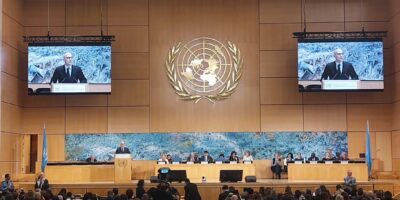


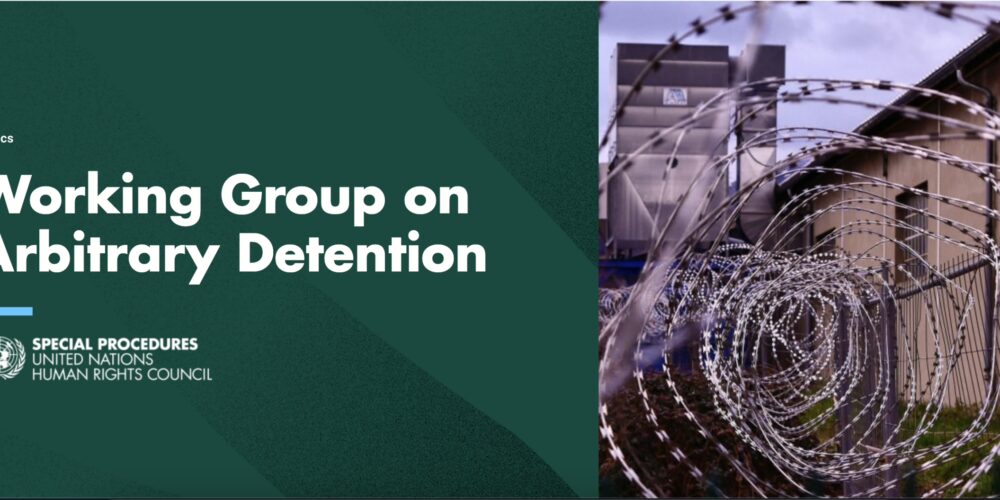
The Committee for Justice (CFJ) participated in the meeting held by the United Nations Working Group on Arbitrary Detention with representatives of civil society organizations on Wednesday, 25 March 2026, in Geneva, ahead of the 105th Session of the Working Group.
The meeting provided an opportunity for the Working Group to update civil society organizations on its recent work and to exchange views on issues related to its mandate. During the meeting, the Working Group noted that its thematic focus for 2026 will address arbitrary detention and transnational repression, and encouraged civil society organizations to continue submitting individual cases. It also indicated that it is currently facing staffing and financial constraints, which have contributed to delays in responding to communications, while noting that it expects to publish nearly 90 legal opinions during the current session, including opinions concerning North African Countries.
CFJ underlined that the ongoing funding crisis affecting many civil society organizations is similarly undermining their ability to document a greater number of cases and communicate them effectively to UN mechanisms.
During the exchange, CFJ intervention highlighted the growing use of arbitrary detention as a tool of transnational repression in North Africa. CFJ noted that it continues to document cases in which individuals are detained as a means of exerting pressure on relatives abroad, particularly human rights defenders, lawyers, journalists, and activists. In many of these cases, family members are subjected to arbitrary arrest, torture, summons to national security premises, travel bans, and surveillance.
CFJ further stressed that North African human rights defenders in exile continue to face intimidation beyond national borders, including digital surveillance, threats, and smear campaigns, often accompanied by reprisals against their families inside their home countries. In this context, arbitrary detention is increasingly being used as a means of indirect coercion aimed at silencing cross-border advocacy and punishing engagement with international mechanisms.
The Committee for Justice welcomes the Working Group’s decision to focus on this issue in 2026 and reiterates the importance of receiving and addressing individual cases, particularly in contexts where arbitrary detention is used systematically to suppress dissent, target human rights defenders, and facilitate reprisals against families and communities.
CFJ further emphasized that, while Working Group opinions may not always be safely invoked at the domestic level in certain countries due to the risk of further reprisals, they remain an important legal foundation for future accountability and reparation efforts.