

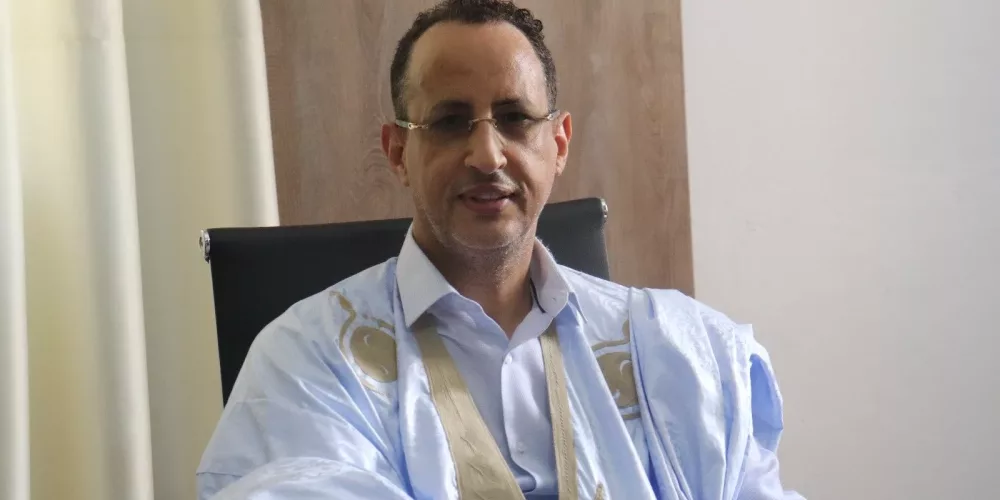
Geneva – Nouakchott: The Committee for Justice (CFJ) has followed with great interest the recent developments in the case of the President of the “Global Transparency” organization, Mr. Mohamed Ould Ghadda. This follows the decision of the Investigating Judge of the Fifth Chamber at the West Nouakchott State Court to refer him to the “Correctional Court,” coinciding with the refusal to accept critical documents and evidence submitted by the defense concerning the “Police Laboratory” case.
Obstructing the Role of Integrity Defenders: CFJ expresses its legal reservations regarding the course of this case, asserting that the judiciary’s refusal to accept documents and evidence presented by Mr. Ould Ghadda constitutes a breach of the “Right to Defense” and fair trial guarantees. Furthermore, the Committee considers that the detention of a human rights defender and transparency activist—against the backdrop of exposing suspected corruption—sends a negative message that may contribute to discouraging the efforts of defenders and professionals involved in oversight and integrity within the country.
Inconsistency with Official Discourse: The Committee for Justice (CFJ) notes that these judicial proceedings against Ould Ghadda may render national anti-corruption commitments procedurally hollow. The protection of “Whistleblowers” is a fundamental pillar of the United Nations Convention against Corruption (UNCAC), which Mauritania has ratified. Imprisoning those who provide evidence of financial irregularities, instead of judicially examining such evidence, represents a regression from transparency and accountability standards.
CFJ reminds the Mauritanian authorities that targeting rights activists with judicial prosecution contradicts:
The Declaration on Human Rights Defenders: Which guarantees the right of individuals and organizations to expose violations and monitor public policies.
The International Covenant on Civil and Political Rights (ICCPR): Particularly articles guaranteeing freedom of expression and the right to access information.
Mauritanian Legal Procedures: Which require the judiciary to maintain an equal distance from all parties and to investigate all submitted evidence before making decisions on detention or referral.
Demands: Accordingly, the Committee for Justice (CFJ) demands:
The immediate release of Mr. Mohamed Ould Ghadda and the guarantee of his right to present all evidence and documents in his possession before the judiciary without hindrance.
The opening of a transparent and serious investigation into the data provided by the “Global Transparency” organization to ensure that the values of integrity prevail over all other considerations.
The provision of legal protection for human rights defenders and professional activists against malicious prosecutions that target their oversight roles.
The Committee for Justice will continue to monitor this case closely and engage with relevant international mechanisms to ensure that the judiciary is not used as a tool to restrict whistleblowers in Mauritania.